


- Retrait en 2 heures
- Assortiment impressionnant
- Paiement sécurisé
- Toujours un magasin près de chez vous
- Retrait en 2 heures
- Assortiment impressionnant
- Paiement sécurisé
- Toujours un magasin près de chez vous



103,95 €
+ 207 points
Format
Description
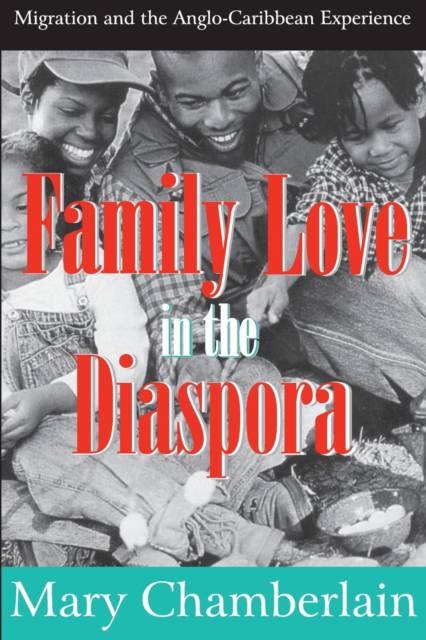
Colonial social policy in the British West Indies from the nineteenth century onward assumed that black families lacked morals, structure, and men, a void that explained poverty and lack of citizenship. African-Caribbean families appeared as the mirror opposite of the "ideal" family advocated by the white, colonial authorities. Yet contrary to this image, what provided continuity in the period and contributed to survival was in fact the strength of family connections, their inclusivity and support. This study is based on 150 life story narratives across three generations of forty-five families who originated in the former British West Indies. The author focuses on the particular axes of Caribbean peoples from the former British colonies of Jamaica, Trinidad and Tobago and Barbados, and Great Britain. Divided into four parts, the chapters within each present an oral history of migrant African-Caribbean families, demonstrating the varieties, organization, and dynamics of family through their memories and narratives. It traces the evolution of Caribbean life; argues how the family can be seen as the tool that helps transmit and transform historical mentalities; examines the dynamics of family life; and makes comparisons with Indo-Caribbean families. Above all, this is a story of families that evolved, against the odds of slavery and poverty, to form a distinct Creole form, through which much of the social history of the English-speaking Caribbean is refracted. Family Love in the Diaspora offers an important new perspective on African-Caribbean families, their history, and the problems they face, for now and the future. It offers a long overdue historical dimension to the debates on Caribbean families. Mary Chamberlain is professor of modern social history at Oxford Brookes University, in the United Kingdom. She is co-editor of the Transaction Memory and Narrative series, which now has nineteen volumes in print.
Spécifications
Parties prenantes
- Auteur(s) :
- Editeur:
Contenu
- Nombre de pages :
- 262
- Langue:
- Anglais
- Collection :
Caractéristiques
- EAN:
- 9781412808552
- Date de parution :
- 01-01-09
- Format:
- Livre broché
- Format numérique:
- Trade paperback (VS)
- Dimensions :
- 152 mm x 229 mm
- Poids :
- 353 g


Seulement chez Librairie Club
+ 207 points sur votre carte client de Librairie Club
Cadeau


Les avis
Nous publions uniquement les avis qui respectent les conditions requises. Consultez nos conditions pour les avis.