


- Retrait en 2 heures
- Assortiment impressionnant
- Paiement sécurisé
- Toujours un magasin près de chez vous
- Retrait en 2 heures
- Assortiment impressionnant
- Paiement sécurisé
- Toujours un magasin près de chez vous



23,95 €
+ 47 points
Description
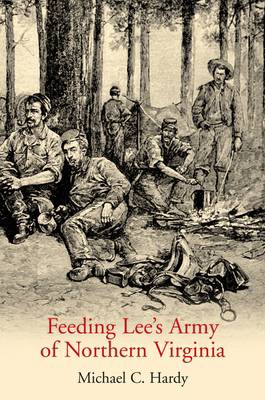
Explores the critical role of food and logistics in sustaining Confederate soldiers during the Civil War.
Carlton McCarthy, a former artilleryman with the Richmond Howitzers, noted after the war that historians would only write about big battles and campaigns, not how the common soldier fried his bacon and baked his biscuits. McCarthy was correct. Save for a few scattered references in a handful of books, no one has documented how an army was fed or has discussed in any detail the daily eating habits of Confederate soldiers until Michael C. Hardy's Feeding Lee's Army of Northern Virginia.
Although seldom studied, food (or the lack thereof) and the logistics behind it played a critical role during the war, contributed mightily to the success and failure of campaigns, and affected the overall outcome of the conflict. Understanding how soldiers prepared their food, how they ate and, very often, went hungry, is a vital tool to understanding their individual experiences and the larger history of supply and logistics within the Confederate army.
Hardy bases his unique study on more than 300 sets of letters and diaries that closely examine the importance of sustenance in the day-to-day life of the soldiers in the Army of Northern Virginia. Various chapters examine food issued by the army, food sent from home to the front, and food carried, collected, and eaten during campaigns. These accounts dispel many misconceptions and assumptions about food during the war and provide a rich and complex picture of the arduous journey various meats, grains, and other foodstuffs underwent to reach hungry soldiers in the field.
In addition to the common soldier, Feeding Lee's Army of Northern Virginia examines what the Confederate high command ate and explores the relationship between hospitals and food, demonstrating the importance of proper nutrition in the recovery and care of the wounded. Hardy also examines the vital role played by camp servants, as well as the critical connection between proper nutrition and morale. The voices of the men themselves provide a multifaceted examination of this central, but often overlooked, field of history.
Battles and campaigns would not have been possible without a proper diet and a functioning logistical system to support the men at the front. Feeding Lee's Army of Northern Virginia offers invaluable insight into this overlooked and understudied topic that made it all possible.
Carlton McCarthy, a former artilleryman with the Richmond Howitzers, noted after the war that historians would only write about big battles and campaigns, not how the common soldier fried his bacon and baked his biscuits. McCarthy was correct. Save for a few scattered references in a handful of books, no one has documented how an army was fed or has discussed in any detail the daily eating habits of Confederate soldiers until Michael C. Hardy's Feeding Lee's Army of Northern Virginia.
Although seldom studied, food (or the lack thereof) and the logistics behind it played a critical role during the war, contributed mightily to the success and failure of campaigns, and affected the overall outcome of the conflict. Understanding how soldiers prepared their food, how they ate and, very often, went hungry, is a vital tool to understanding their individual experiences and the larger history of supply and logistics within the Confederate army.
Hardy bases his unique study on more than 300 sets of letters and diaries that closely examine the importance of sustenance in the day-to-day life of the soldiers in the Army of Northern Virginia. Various chapters examine food issued by the army, food sent from home to the front, and food carried, collected, and eaten during campaigns. These accounts dispel many misconceptions and assumptions about food during the war and provide a rich and complex picture of the arduous journey various meats, grains, and other foodstuffs underwent to reach hungry soldiers in the field.
In addition to the common soldier, Feeding Lee's Army of Northern Virginia examines what the Confederate high command ate and explores the relationship between hospitals and food, demonstrating the importance of proper nutrition in the recovery and care of the wounded. Hardy also examines the vital role played by camp servants, as well as the critical connection between proper nutrition and morale. The voices of the men themselves provide a multifaceted examination of this central, but often overlooked, field of history.
Battles and campaigns would not have been possible without a proper diet and a functioning logistical system to support the men at the front. Feeding Lee's Army of Northern Virginia offers invaluable insight into this overlooked and understudied topic that made it all possible.
Spécifications
Parties prenantes
- Auteur(s) :
- Editeur:
Contenu
- Nombre de pages :
- 180
- Langue:
- Anglais
Caractéristiques
- EAN:
- 9781611217988
- Date de parution :
- 30-04-26
- Format:
- Livre broché
- Format numérique:
- Trade paperback (VS)
- Dimensions :
- 152 mm x 228 mm
- Poids :
- 358 g


Seulement chez Librairie Club
+ 47 points sur votre carte client de Librairie Club
Cadeau


Les avis
Nous publions uniquement les avis qui respectent les conditions requises. Consultez nos conditions pour les avis.