


En raison d'une grève chez bpost, des retards de livraison peuvent survenir. Besoin de quelque chose en urgence ? Optez pour un retrait en magasin ou rendez-vous dans une Librairie Club à proximité.
- Retrait en 2 heures
- Assortiment impressionnant
- Paiement sécurisé
- Toujours un magasin près de chez vous
En raison d'une grève chez bpost, des retards de livraison peuvent survenir. Besoin de quelque chose en urgence ? Optez pour un retrait en magasin ou rendez-vous dans une Librairie Club à proximité.
- Retrait en 2 heures
- Assortiment impressionnant
- Paiement sécurisé
- Toujours un magasin près de chez vous


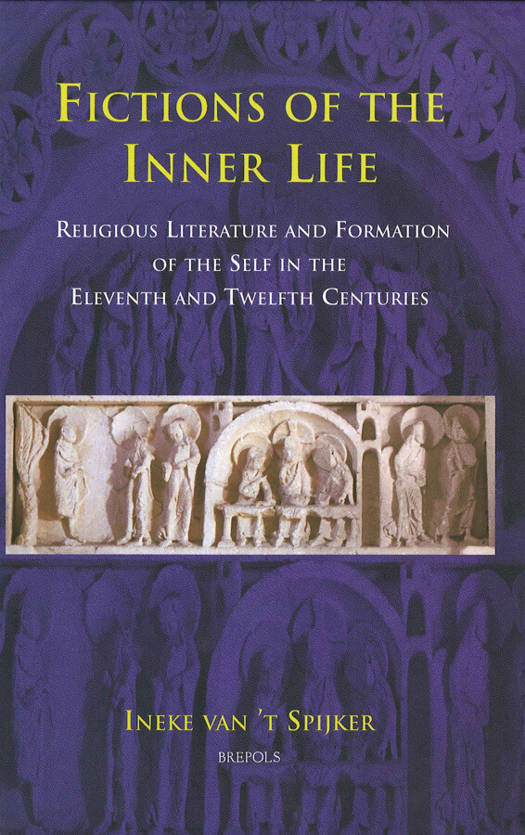
Fictions of the Inner Life
Religious Literature and Formation of the Self in the Eleventh and Twelfth Centuries
Ineke Van 't Spijker
37,10 €
+ 74 points
Description
Interiorization and a trend towards a consideration of the nature of personal experience have long been recognized as important elements in the changing landscape of the religious culture of the eleventh and twelfth centuries. The homo interior is at the centre of the religious writings of that time, and the 'inner man' is a pivotal concept for making sense of the literature of religious formation. Monastic writers try to provide their readers with a 'script' to enact in themselves, in order to form their inner self, as the way to ascend to the knowledge of God. Interiority, however, is not a straightforward aspect of human existence with an unchanging meaning. The notion as it is used by medieval monastic authors gives expression to a specific understanding of what a human being was thought to be, quite different from later self-perceptions. Because of this difference, when they write 'histories of the self' historians and philosophers often pass over the Middle Ages. On the other hand, in histories of mysticism the twelfth century is often read through the lens of later mysticism. This book explores the notion of interiority via four influential authors of the eleventh and twelfth centuries, and the way in which notions about interiority function in their pedagogy. The concepts governing how the homo interior is fashioned are developed within age-old monastic and theological traditions. Medieval ideas about man as imago Dei, monastic reading culture and biblical exegesis are only a few of the elements of these traditions. The choice of authors has been guided by the wish to encompass and highlight various aspects of the eleventh- and twelfth-century notions of 'inner life': monastic and eremitical tradition in Peter Damian, theological-anthropological concepts in Hugh of Saint-Victor, the importance of exegetical procedures in Richard of Saint-Victor, and the role of experience in William of Saint-Thierry. These authors illustrate what was then conceptually possible when it came to thinking about the inner life. Their notions of the inner self are an intriguing part of a continuing history of conceptions of the self and of how it may be fashioned.
Spécifications
Parties prenantes
- Auteur(s) :
- Editeur:
Contenu
- Nombre de pages :
- 274
- Langue:
- Anglais
- Collection :
- Tome:
- n° 4
Caractéristiques
- EAN:
- 9782503515144
- Date de parution :
- 01-10-2004
- Format:
- Livre relié
- Format numérique:
- Genaaid
- Dimensions :
- 166 mm x 245 mm
- Poids :
- 621 g


Seulement chez Librairie Club
+ 74 points sur votre carte client de Librairie Club
Cadeau


Les avis
Nous publions uniquement les avis qui respectent les conditions requises. Consultez nos conditions pour les avis.