


- Retrait en 2 heures
- Assortiment impressionnant
- Paiement sécurisé
- Toujours un magasin près de chez vous
- Retrait en 2 heures
- Assortiment impressionnant
- Paiement sécurisé
- Toujours un magasin près de chez vous



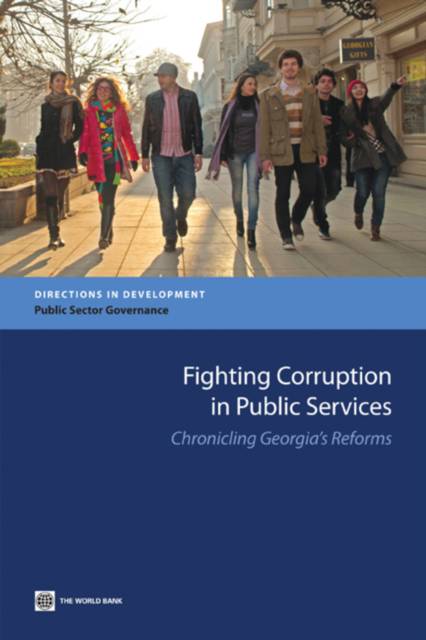
Fighting Corruption in Public Services
Chronicling Georgia's Reforms
Inc World Book
Livre broché | Anglais
44,45 €
+ 88 points
Description
"Since the Rose Revolution at the end of 2003, Georgia has had singular success in fighting corruption in a variety of public services. This book is an attempt to chronicle these efforts and to distil the 'how to' of these anti-corruption reforms. The reason corruption in public services had to be fought was clear. What had to be done was also obvious to many. But little has been written on 'how' the government made it happen. What were the salient features of Georgia's anti-corruption reforms? Can Georgia's success with cleaning up its public services be replicated elsewhere or is it unique? And are the achievements to date in Georgia sustainable? This book tries to answer these questions. It uses available data and interviews with current and former government officials to describe the challenges facing government, the decisions made, and the tradeoffs considered. It presents eight case studies covering anti-corruption reforms in the patrol police, taxes, customs, power supply, business deregulations, civil and public registries, university entrance exams, and municipal services. They also analyze the accountability framework between the government, public services providers and the users of the services.From these case studies, ten themes emerge that help explain Georgia's success story: having strong political will and vision; establishing credibility early; undertaking a frontal assault; attracting new staff; limiting the role of the state; adopting unconventional methods; coordinating closely; tailoring international experience to local conditions; harnessing technology; and using communications strategically. Many of these may seem obvious. What was special was the comprehensiveness, boldness, pace, and sequencing of these reforms. Much still remains to be done in Georgia, especially in strengthening the institutions that safeguard against a relapse of corruption, and in ensuring adequate checks and balances. And while each country is unique, many elements of Georgia's story can be replicated elsewhere. Georgia's success destroys the myth that 'corruption is culture' and gives hope to all those aspiring to clean up their public services."
Spécifications
Parties prenantes
- Auteur(s) :
- Editeur:
Contenu
- Nombre de pages :
- 122
- Langue:
- Anglais
Caractéristiques
- EAN:
- 9780821394755
- Date de parution :
- 24-01-12
- Format:
- Livre broché
- Format numérique:
- Trade paperback (VS)
- Dimensions :
- 152 mm x 229 mm
- Poids :
- 176 g



Seulement chez Librairie Club
+ 88 points sur votre carte client de Librairie Club
Cadeau


Les avis
Nous publions uniquement les avis qui respectent les conditions requises. Consultez nos conditions pour les avis.