


- Retrait en 2 heures
- Assortiment impressionnant
- Paiement sécurisé
- Toujours un magasin près de chez vous
- Retrait gratuit dans votre magasin Club
- 7.000.0000 titres dans notre catalogue
- Payer en toute sécurité
- Toujours un magasin près de chez vous

Description
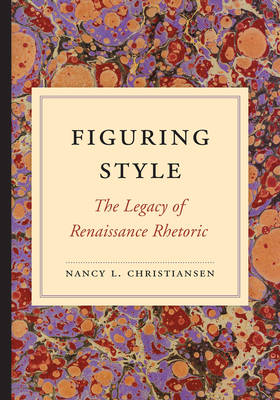
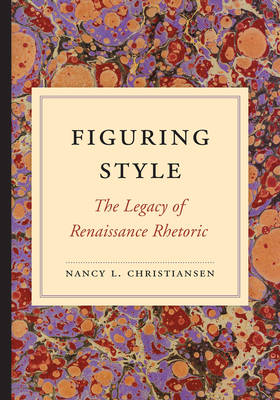
Nancy L. Christiansen provides a broad and deep introduction to the discussion of rhetorical stylistic instruction in the English Renaissance. She argues that most contemporary characterizations of Renaissance stylistic theory are reductions obscuring the comprehensive composing and reading method taught by Renaissance rhetoricians. At the core of her discussion is the concept of figures, and Christiansen traces the nomenclature of the figures back to its origins, observing how these terms have mutated, fused, and confused over the centuries. Renaissance figures serve, she argues, to structure all three dimensions of language-speech, thought, and action. As a consequence, in the Renaissance paradigm there are not two types of language, figured and unfigured, but a single language composed of a web of figures. Christiansen makes the largest possible claims for the figures as representing discourse "forms" at all levels and as providing an ethical center for cultural practices. She also notes that the figures anticipate some elements of contemporary cognitive linguistics. Her discussion includes a substantial review of rhetorical history to create a lineage from Isocratean/Ciceronian rhetorical theory to the work of Ascham, Puttenham, and others. She also offers a demonstration of these principles in textual analysis by applying them to passages from Shakespeare's Titus Andronicus and Sonnet 129 and from Milton's Paradise Lost. The resulting explications illustrate not only the primacy of figures to text and their substantive nature, but also the comprehensiveness and insightfulness of such a reading method. Completing her treatment of Renaissance style is a comprehensive handlist of figures, from phonetic and morphological through logical, discoursal, and qualitative categories, along with definitions and examples from both classical and Renaissance sources. The result is a handbook that demystifies Renaissance theory and practice of style in its own historical, philosophical, and pedagogical contexts.
Spécifications
Parties prenantes
- Auteur(s) :
- Editeur:
Contenu
- Nombre de pages :
- 652
- Langue:
- Anglais
- Collection :
Caractéristiques
- EAN:
- 9781611172409
- Date de parution :
- 08-08-13
- Format:
- Livre relié
- Format numérique:
- Genaaid
- Dimensions :
- 178 mm x 254 mm
- Poids :
- 1338 g


Seulement chez Librairie Club
+ 321 points sur votre carte client de Librairie Club

Les avis
Nous publions uniquement les avis qui respectent les conditions requises. Consultez nos conditions pour les avis.