


En raison d'une grève chez bpost, des retards de livraison peuvent survenir. Besoin de quelque chose en urgence ? Optez pour un retrait en magasin ou rendez-vous dans une Librairie Club à proximité.
- Retrait en 2 heures
- Assortiment impressionnant
- Paiement sécurisé
- Toujours un magasin près de chez vous
En raison d'une grève chez bpost, des retards de livraison peuvent survenir. Besoin de quelque chose en urgence ? Optez pour un retrait en magasin ou rendez-vous dans une Librairie Club à proximité.
- Retrait en 2 heures
- Assortiment impressionnant
- Paiement sécurisé
- Toujours un magasin près de chez vous



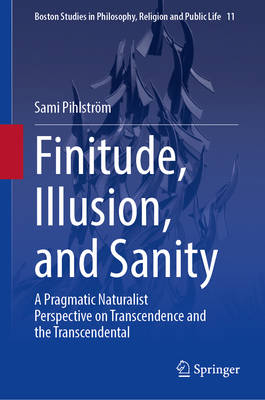
Finitude, Illusion, and Sanity
A Pragmatic Naturalist Perspective on Transcendence and the Transcendental
Sami Pihlström
129,95 €
+ 259 points
Description
This monograph investigates, from a distinctive philosophical perspective informed by pragmatism, the relation between the transcendental and the transcendent. It not only develops a viable form of pragmatic transcendental naturalism (which the author has defended in earlier works) but examines the intertwining themes of sanity and illusion, arising through critical considerations of approaches to transcendence that fail to take seriously human finitude. Issues discussed range from those found in metaphysics and epistemology to those in ethics and philosophy of religion. They are all intimately related to each other by offering variations of aspirations to reach toward transcendence and, in many cases, of the illusoriness of those aspirations. This illusoriness is something that requires thoroughgoing pragmatic and transcendental critique, combining argumentation strategies drawn from philosophers as different as Kant, Wittgenstein, and William James. This critique leads, among other things, to a radical rearticulation of how philosophy of religion as a sub-discipline of philosophy ought to be practiced. This text appeals to researchers and graduate students working in these fields.
Spécifications
Parties prenantes
- Auteur(s) :
- Editeur:
Contenu
- Nombre de pages :
- 298
- Langue:
- Anglais
- Collection :
- Tome:
- n° 11
Caractéristiques
- EAN:
- 9783032250094
- Date de parution :
- 10-06-26
- Format:
- Livre relié
- Format numérique:
- Genaaid
- Dimensions :
- 155 mm x 235 mm


Seulement chez Librairie Club
+ 259 points sur votre carte client de Librairie Club
Cadeau


Les avis
Nous publions uniquement les avis qui respectent les conditions requises. Consultez nos conditions pour les avis.