


- Retrait en 2 heures
- Assortiment impressionnant
- Paiement sécurisé
- Toujours un magasin près de chez vous
- Retrait en 2 heures
- Assortiment impressionnant
- Paiement sécurisé
- Toujours un magasin près de chez vous



17,34 €
+ 17 points
Description
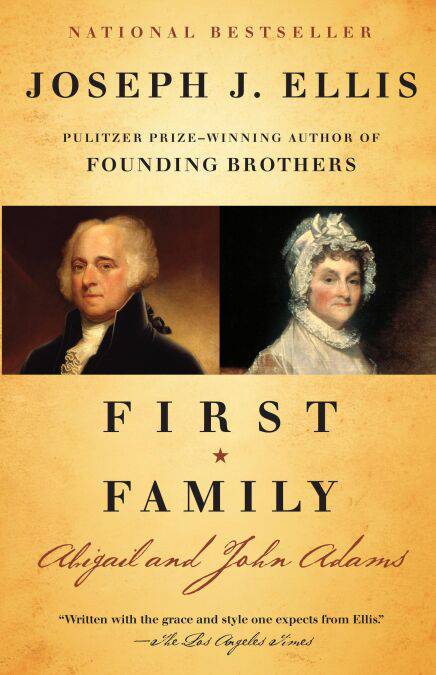
The Pulitzer Prize–winning, best-selling author of Founding Brothers and His Excellency brings America’s preeminent first couple to life in a moving and illuminating narrative that sweeps through the American Revolution and the republic’s tenuous early years.
John and Abigail Adams left an indelible and remarkably preserved portrait of their lives together in their personal correspondence: both Adamses were prolific letter writers (although John conceded that Abigail was clearly the more gifted of the two), and over the years they exchanged more than twelve hundred letters. Joseph J. Ellis distills this unprecedented and unsurpassed record to give us an account both intimate and panoramic; part biography, part political history, and part love story.
Ellis describes the first meeting between the two as inauspicious—John was twenty-four, Abigail just fifteen, and each was entirely unimpressed with the other. But they soon began a passionate correspondence that resulted in their marriage five years later.
Over the next decades, the couple were separated nearly as much as they were together. John’s political career took him first to Philadelphia, where he became the boldest advocate for the measures that would lead to the Declaration of Independence. Yet in order to attend the Second Continental Congress, he left his wife and children in the middle of the war zone that had by then engulfed Massachusetts. Later he was sent to Paris, where he served as a minister to the court of France alongside Benjamin Franklin. These years apart stressed the Adamses’ union almost beyond what it could bear: Abigail grew lonely, while the Adams children suffered from their father’s absence.
John was elected the nation’s first vice president, but by the time of his reelection, Abigail’s health prevented her from joining him in Philadelphia, the interim capital. She no doubt had further reservations about moving to the swamp on the Potomac when John became president, although this time he persuaded her. President Adams inherited a weak and bitterly divided country from George Washington. The political situation was perilous at best, and he needed his closest advisor by his side: “I can do nothing,” John told Abigail after his election, “without you.”
In Ellis’s rich and striking new history, John and Abigail’s relationship unfolds in the context of America’s birth as a nation.
John and Abigail Adams left an indelible and remarkably preserved portrait of their lives together in their personal correspondence: both Adamses were prolific letter writers (although John conceded that Abigail was clearly the more gifted of the two), and over the years they exchanged more than twelve hundred letters. Joseph J. Ellis distills this unprecedented and unsurpassed record to give us an account both intimate and panoramic; part biography, part political history, and part love story.
Ellis describes the first meeting between the two as inauspicious—John was twenty-four, Abigail just fifteen, and each was entirely unimpressed with the other. But they soon began a passionate correspondence that resulted in their marriage five years later.
Over the next decades, the couple were separated nearly as much as they were together. John’s political career took him first to Philadelphia, where he became the boldest advocate for the measures that would lead to the Declaration of Independence. Yet in order to attend the Second Continental Congress, he left his wife and children in the middle of the war zone that had by then engulfed Massachusetts. Later he was sent to Paris, where he served as a minister to the court of France alongside Benjamin Franklin. These years apart stressed the Adamses’ union almost beyond what it could bear: Abigail grew lonely, while the Adams children suffered from their father’s absence.
John was elected the nation’s first vice president, but by the time of his reelection, Abigail’s health prevented her from joining him in Philadelphia, the interim capital. She no doubt had further reservations about moving to the swamp on the Potomac when John became president, although this time he persuaded her. President Adams inherited a weak and bitterly divided country from George Washington. The political situation was perilous at best, and he needed his closest advisor by his side: “I can do nothing,” John told Abigail after his election, “without you.”
In Ellis’s rich and striking new history, John and Abigail’s relationship unfolds in the context of America’s birth as a nation.
Spécifications
Parties prenantes
- Auteur(s) :
- Editeur:
Contenu
- Nombre de pages :
- 320
- Langue:
- Anglais
Caractéristiques
- EAN:
- 9780307594310
- Date de parution :
- 25-10-10
- Format:
- Ebook
- Protection digitale:
- Adobe DRM
- Format numérique:
- ePub



Seulement chez Librairie Club
+ 17 points sur votre carte client de Librairie Club
Cadeau


Les avis
Nous publions uniquement les avis qui respectent les conditions requises. Consultez nos conditions pour les avis.