


- Retrait en 2 heures
- Assortiment impressionnant
- Paiement sécurisé
- Toujours un magasin près de chez vous
- Retrait gratuit dans votre magasin Club
- 7.000.0000 titres dans notre catalogue
- Payer en toute sécurité
- Toujours un magasin près de chez vous



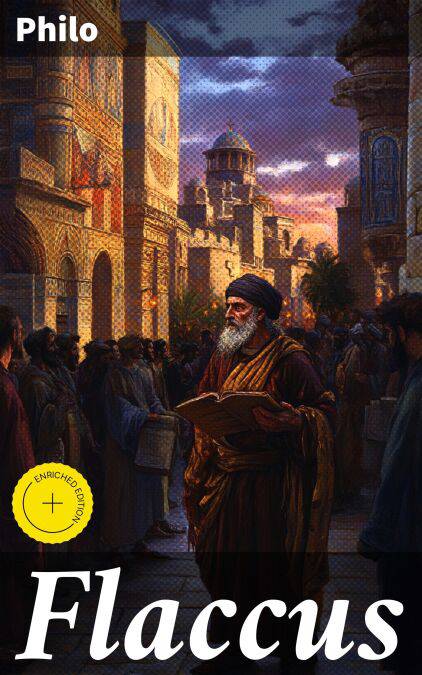
Flaccus EBOOK
Enriched edition. Exploring Power and Ethics in Ancient Alexandria
Philo
Ebook | Anglais
1,99 €
+ 1 points
Description
In 'Flaccus', Philo of Alexandria presents a nuanced exploration of Jewish identity in a Hellenistic world, employing a blend of philosophical discourse and poetic rhetoric. This work serves as both a defense of Jewish customs against the backdrop of Greco-Roman criticism and a reflection on the complexities of cultural integration. Written in a sophisticated style, 'Flaccus' utilizes allegory and dialectical reasoning to engage with the themes of faith, ethnicity, and moral philosophy, distinguishing itself as a seminal piece in the realm of Jewish literature while conversing with contemporaneous philosophical and theological debates. Philo, a Hellenistic Jewish philosopher from Alexandria, lived during a turbulent time when Jewish communities faced increasing pressures from surrounding cultures. His upbringing in a cosmopolitan city infused him with profound insights into both Jewish traditions and Hellenistic thought, providing a distinctive lens through which he could articulate the struggles and resilience of his people. His works often blend elements of Stoicism and Platonic philosophy, reflecting the syncretic environment in which he wrote. 'Flaccus' is essential reading for anyone interested in the intersection of Jewish and Greek thought, historical cultural exchanges, or the evolution of identity in ancient times. Philo's eloquent prose and deep philosophical insights render this text both intellectually enriching and profoundly relevant, making it a valuable addition to the library of scholars and casual readers alike.
In this enriched edition, we have carefully created added value for your reading experience:
- A succinct Introduction situates the work's timeless appeal and themes.
- The Synopsis outlines the central plot, highlighting key developments without spoiling critical twists.
- A detailed Historical Context immerses you in the era's events and influences that shaped the writing.
- A thorough Analysis dissects symbols, motifs, and character arcs to unearth underlying meanings.
- Reflection questions prompt you to engage personally with the work's messages, connecting them to modern life.
- Hand‐picked Memorable Quotes shine a spotlight on moments of literary brilliance.
- Interactive footnotes clarify unusual references, historical allusions, and archaic phrases for an effortless, more informed read.
In this enriched edition, we have carefully created added value for your reading experience:
- A succinct Introduction situates the work's timeless appeal and themes.
- The Synopsis outlines the central plot, highlighting key developments without spoiling critical twists.
- A detailed Historical Context immerses you in the era's events and influences that shaped the writing.
- A thorough Analysis dissects symbols, motifs, and character arcs to unearth underlying meanings.
- Reflection questions prompt you to engage personally with the work's messages, connecting them to modern life.
- Hand‐picked Memorable Quotes shine a spotlight on moments of literary brilliance.
- Interactive footnotes clarify unusual references, historical allusions, and archaic phrases for an effortless, more informed read.
Spécifications
Parties prenantes
- Auteur(s) :
- Traducteur(s):
- Editeur:
Contenu
- Nombre de pages :
- 41
- Langue:
- Anglais
Caractéristiques
- EAN:
- 4064066316990
- Date de parution :
- 09-04-21
- Format:
- Ebook
- Protection digitale:
- Digital watermarking
- Format numérique:
- ePub


Seulement chez Librairie Club
+ 1 points sur votre carte client de Librairie Club
Cadeau

Cadeau


Les avis
Nous publions uniquement les avis qui respectent les conditions requises. Consultez nos conditions pour les avis.