


- Retrait en 2 heures
- Assortiment impressionnant
- Paiement sécurisé
- Toujours un magasin près de chez vous
- Retrait en 2 heures
- Assortiment impressionnant
- Paiement sécurisé
- Toujours un magasin près de chez vous



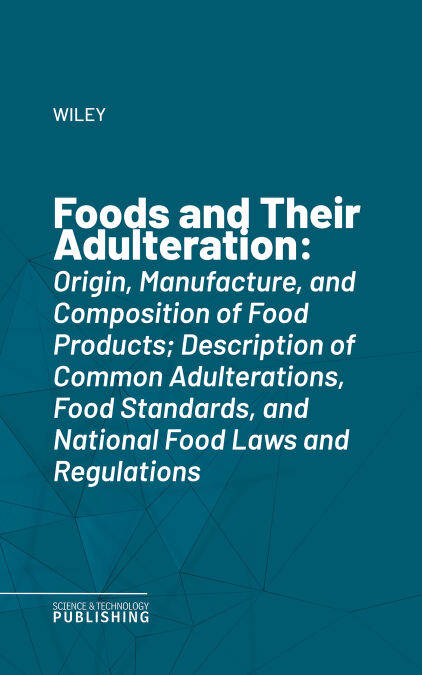
Foods and Their Adulteration EBOOK
Origin, Manufacture, and Composition of Food Products; Description of Common Adulterations, Food Standards, and National Food Laws and Regulations
Wiley
Ebook | Anglais
19,99 €
+ 19 points
Description
Foods and Their Adulteration: Origin, Manufacture, and Composition of Food Products; Description of Common Adulterations, Food Standards, and National Food Laws and Regulations by Harvey W. Wiley is a comprehensive and authoritative exploration of the food industry at the turn of the 20th century. This seminal work delves deeply into the origins, manufacturing processes, and chemical composition of a wide array of food products, providing readers with a thorough understanding of what they consume daily. Wiley meticulously examines the prevalence and methods of food adulteration, exposing the deceptive practices used to alter or contaminate foods for economic gain, often at the expense of public health. The book is organized into detailed chapters that cover staple foods such as milk, butter, cheese, cereals, bread, meats, beverages, spices, and more. Each section discusses the natural properties of these foods, the processes involved in their production, and the ways in which they are commonly adulterated. Wiley provides scientific analyses, case studies, and historical context, making the book both informative and engaging for readers interested in food science, public health, and consumer protection. A significant portion of the book is dedicated to the development and implementation of food standards, as well as the evolution of national food laws and regulations. Wiley, a pioneering figure in the fight for food safety, offers insights into the legislative efforts that led to the establishment of the Pure Food and Drug Act and other regulatory measures. He highlights the importance of government oversight and the role of scientific testing in ensuring the purity and safety of the food supply. Foods and Their Adulteration serves as both a historical document and a practical guide, reflecting the growing awareness of food safety issues in the early 1900s. It is an invaluable resource for historians, scientists, policy makers, and anyone interested in the origins of modern food safety standards. Through its detailed descriptions, scientific rigor, and passionate advocacy for consumer protection, the book remains a landmark in the field of food science and public health.
Spécifications
Parties prenantes
- Auteur(s) :
- Editeur:
Contenu
- Langue:
- Anglais
Caractéristiques
- EAN:
- 9782528119860
- Date de parution :
- 31-08-25
- Format:
- Ebook
- Protection digitale:
- /
- Format numérique:
- ePub


Seulement chez Librairie Club
+ 19 points sur votre carte client de Librairie Club
Cadeau


Les avis
Nous publions uniquement les avis qui respectent les conditions requises. Consultez nos conditions pour les avis.