


- Retrait en 2 heures
- Assortiment impressionnant
- Paiement sécurisé
- Toujours un magasin près de chez vous
- Retrait en 2 heures
- Assortiment impressionnant
- Paiement sécurisé
- Toujours un magasin près de chez vous



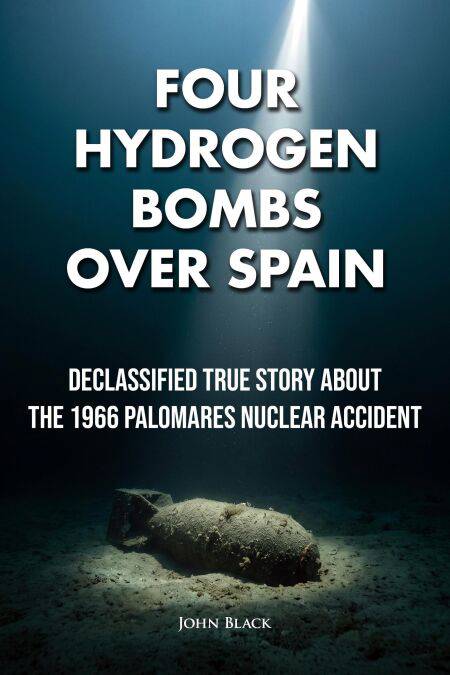
Four Hydrogen Bombs Over Spain - Declassified True Story About the 1966 Palomares Nuclear Accident EBOOK
Near-Missed, #1
John Black
2,99 €
+ 2 points
Description
1966 Palomares hydrogen bomb accident, the day four thermonuclear weapons fell from a clear blue Spanish sky and turned one forgotten farming village into the most dangerous square mile of the Cold War. This book drops you into the cockpit of the doomed B-52, the cramped belly of the KC-135 tanker, the tomato fields dusted with invisible plutonium, and the classified conference rooms in Washington and Madrid where men in suits tried to bury what really happened. You are not reading a dry summary. You are riding on a mission called Chrome Dome, feeling the buffeting of air at 31,000 feet, watching refueling go wrong in seconds, and then standing beside villagers who have no idea that the "plane crash" in their fields has scattered weapons a hundred times more powerful than Hiroshima.
Told through the eyes of pilots, Spanish fishermen, cleanup soldiers, and the villagers of Palomares, this narrative military history shows how the United States lost four hydrogen bombs, how NATO panicked, and how bureaucrats moved faster to control headlines than to protect human beings. Drawing on declassified cables, long-buried accident reports, and decades of investigative journalism, it reveals the full story: the eighty-day deep-sea hunt for the missing bomb, the orchestrated "safe" swim by the U.S. ambassador, the soldiers ordered to shovel radioactive soil with minimal protection, and the villagers who were told for years that their land was "safe" while more dangerous americium quietly accumulated beneath their feet.
If you love books like Black Hawk Down, Lone Survivor, and No Easy Day, you will recognize the same immersive, moment-by-moment storytelling here — but turned toward a mission that failed. This is not a victory lap. It is a record of a disaster, a cover-up, and a decades-long struggle for the truth. You will see the accident through American and Spanish eyes, feel the Cold War pressure as Soviet ships circle the recovery zone, and follow the veterans who came home only to discover, much later, what they had actually been exposed to.
For readers of military nonfiction, nuclear history, Cold War thrillers, and real-life disaster narratives, this book delivers a complete, gripping account of the 1966 Palomares hydrogen bomb accident — the contamination that never fully went away, the promises that were never fully kept, and the people who paid the price. When you turn the last page, you will understand why one small village in Spain still lives with the fallout of a mission most governments would rather you forgot.
Spécifications
Parties prenantes
- Auteur(s) :
- Editeur:
Contenu
- Langue:
- Anglais
- Collection :
Caractéristiques
- EAN:
- 9798235642683
- Date de parution :
- 18-05-26
- Format:
- Ebook
- Protection digitale:
- /
- Format numérique:
- ePub


Seulement chez Librairie Club
+ 2 points sur votre carte client de Librairie Club
Cadeau


Les avis
Nous publions uniquement les avis qui respectent les conditions requises. Consultez nos conditions pour les avis.