


- Retrait en 2 heures
- Assortiment impressionnant
- Paiement sécurisé
- Toujours un magasin près de chez vous
- Retrait en 2 heures
- Assortiment impressionnant
- Paiement sécurisé
- Toujours un magasin près de chez vous



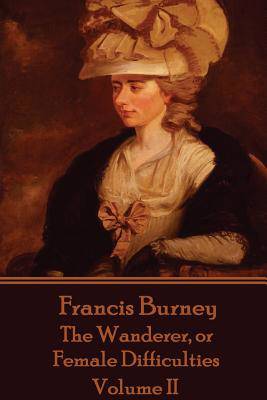
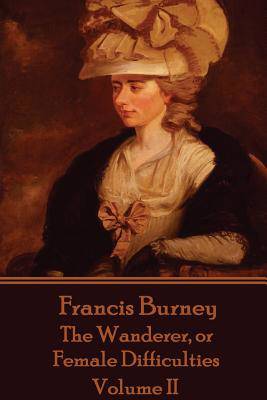
Frances Burney - The Wanderer, or Female Difficulties
Volume II
Frances Burney
Livre broché | Anglais
11,95 €
+ 23 points
Format
Description
Frances Burney was born on June 13th, 1752 in Lynn Regis (now King's Lynn). By the age of 8 Frances had still not learned the alphabet and couldn't read. She now began a period of self-education, which included devouring the family library and to begin her own 'scribblings', these journal writings would document her life and cover the next 72 years. Her journal writing was accepted but writing novels was frowned upon by her family and friends. Feeling that she had been improper, she burnt her first manuscript, The History of Caroline Evelyn, which she had written in secret. It was only in 1778 with the anonymous publication of Evelina that her talents were available to the wider world. She was now a published and admired author. Despite this success and that of her second novel, Cecilia, in 1785, Frances travelled to the court of King George III and Queen Charlotte and was offered the post of "Keeper of the Robes". Frances hesitated. She had no wish to be separated from her family, nor to anything that would restrict her time in writing. But, unmarried at 34, she felt obliged to accept and thought that improved social status and income might allow her greater freedom to write. The years at Court were fruitful but took a toll on her health, writing and relationships and in 1790 she prevailed upon her father to request her release from service. He was successful. The ideals of the French Revolution had brought support from many English literates for the ideals of equality and social justice. Frances quickly became attached to General Alexandre D'Arblay, an artillery officer who had fled to England. In spite of the objections of her father they were married on July 28th, 1793. On December 18th, 1794, Frances gave birth to their only child, a son, Alexander. Frances's third novel, Camilla, in 1796 earned her £2000 and was enough for them to build a house in Westhumble; Camilla Cottage. In 1801 D'Arblay was offered service with the government of Napoleon in France, and in 1802 Frances and her son followed him to Paris, where they expected to remain for a year. The outbreak of the war between France and England meant their stay extended for ten years. In August 1810 Frances developed breast cancer and underwent a mastectomy performed by "7 men in black". Frances was later able to write about the operation in detail, being conscious through most of it, anesthetics not yet being in use. With the death of D'Arblay, in 1818, of cancer, Frances moved to London to be near her son. Tragically he died in 1837. Frances, in her last years, was by now retired but entertained many visits from younger members of the Burney family, who gathered to listen to her fascinating accounts and her talents for imitating the people she described. Frances Burney died on January 6th, 1840.
Spécifications
Parties prenantes
- Auteur(s) :
- Editeur:
Contenu
- Nombre de pages :
- 124
- Langue:
- Anglais
Caractéristiques
- EAN:
- 9781785434792
- Date de parution :
- 29-12-16
- Format:
- Livre broché
- Format numérique:
- Trade paperback (VS)
- Dimensions :
- 152 mm x 229 mm
- Poids :
- 176 g


Seulement chez Librairie Club
+ 23 points sur votre carte client de Librairie Club
Cadeau


Les avis
Nous publions uniquement les avis qui respectent les conditions requises. Consultez nos conditions pour les avis.