


- Retrait en 2 heures
- Assortiment impressionnant
- Paiement sécurisé
- Toujours un magasin près de chez vous
- Retrait en 2 heures
- Assortiment impressionnant
- Paiement sécurisé
- Toujours un magasin près de chez vous



42,45 €
+ 84 points
Description
The years between the two World Wars were decades of contrasts. The Roaring Twenties are remembered as years of prosperity and frivolity that were ended abruptly by the Great Depression of the 1930s. The Republican-dominated, pro-business politics of the 1920s gave way to the Democratic activism of the New Deal. But for women there was continuity to these years, as their ability to effect change in political, cultural, and economic arenas of life began to gain strength.
Radio, movies, and mass advertising took the country by storm, and for the first time women were recognized as prime consumers. This "new woman" could legally vote on the same basis as men everywhere in the United States. She wore clothes that scandalized her grandparents but were far more comfortable than anything her mother ever wore. She was being elected to public office, was leading peace movements, and demanded better health care for women and children. And in the 1930s she found in Eleanor Roosevelt a role model who was recognized internationally as a leading influence in American policy. American women felt a freedom never imagined by earlier generations.
But some women did not share in this emancipation. Black women, Jewish women, Native American women--they found many of the newly opened doors slammed shut for them. They labored as clerical workers, domestic servants, farm or factory workers, not for self-fulfillment or liberation, but because their paychecks were needed to put food on the table. Even in the prosperous days of the flapper, some women faced a daily battle for survival.
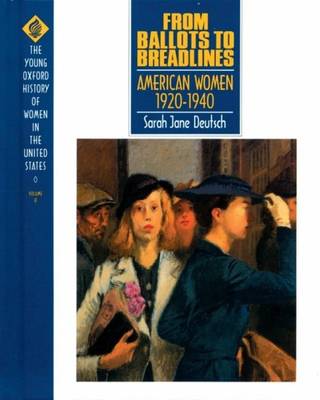
From Ballots to Breadlines takes American women from the euphoria of the 1920s to the sober reality of the 1930s. As they began to vote and bring home wages, a woman's role began to change, and with it the traditional image of the American family.
Radio, movies, and mass advertising took the country by storm, and for the first time women were recognized as prime consumers. This "new woman" could legally vote on the same basis as men everywhere in the United States. She wore clothes that scandalized her grandparents but were far more comfortable than anything her mother ever wore. She was being elected to public office, was leading peace movements, and demanded better health care for women and children. And in the 1930s she found in Eleanor Roosevelt a role model who was recognized internationally as a leading influence in American policy. American women felt a freedom never imagined by earlier generations.
But some women did not share in this emancipation. Black women, Jewish women, Native American women--they found many of the newly opened doors slammed shut for them. They labored as clerical workers, domestic servants, farm or factory workers, not for self-fulfillment or liberation, but because their paychecks were needed to put food on the table. Even in the prosperous days of the flapper, some women faced a daily battle for survival.
From Ballots to Breadlines takes American women from the euphoria of the 1920s to the sober reality of the 1930s. As they began to vote and bring home wages, a woman's role began to change, and with it the traditional image of the American family.
Spécifications
Parties prenantes
- Auteur(s) :
- Editeur:
Contenu
- Nombre de pages :
- 144
- Langue:
- Anglais
- Collection :
- Tome:
- n° 8
Caractéristiques
- EAN:
- 9780195080636
- Date de parution :
- 22-09-94
- Format:
- Livre relié
- Format numérique:
- Genaaid
- Dimensions :
- 199 mm x 244 mm
- Poids :
- 512 g


Seulement chez Librairie Club
+ 84 points sur votre carte client de Librairie Club
Cadeau


Les avis
Nous publions uniquement les avis qui respectent les conditions requises. Consultez nos conditions pour les avis.