


- Retrait en 2 heures
- Assortiment impressionnant
- Paiement sécurisé
- Toujours un magasin près de chez vous
- Retrait en 2 heures
- Assortiment impressionnant
- Paiement sécurisé
- Toujours un magasin près de chez vous



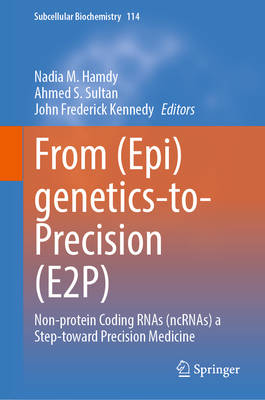
From (Epi)Genetics-To-Precision (E2p)
Non-Protein Coding Rnas (Ncrnas) a Step-Toward Precision Medicine
184,45 €
+ 368 points
Description
This book explores the intricate world of epigenetics and its pivotal role in precision medicine and the identification of epigenetic biomarkers for patient stratification, highlighting the importance of non-coding RNAs (ncRNAs), DNA methylation and histone modifications. The book discusses various epigenetic drugs, such as HDAC inhibitors and DNA methyltransferase inhibitors, targeting specific pathways to provide new therapeutic avenues. An important part in each chapter is dedicated to in silico analysis in epigenetics, including genome-wide association studies to identify correlations between genetic variations and epigenetic changes. It also covers computational models that simulate the effects of epigenetic modifications on cellular behaviour, providing insights into clinical trials with prodrugs in various types of cancer. The book focuses on the crucial role of gut microorganisms in hormone metabolism, synthesis of bioactive compounds and maintenance of the immune response, influencing endocrine homeostasis. It explores the interplay between gut microbiota, ncRNAs and endocrine regulation, focusing on endocrine-related cancers. The impact of the gut microbiome on host health through epigenetic changes is examined in depth, with a particular focus on the role of ncRNAs in host-microbe interactions. Advances in liver cell epigenetics are discussed, showing how epigenetic changes contribute to liver disorders and the potential for epigenetic-based therapeutic approaches. The book also addresses the impact of epigenetic modifications in colorectal cancer and breast cancer highlighting their role in inflammation, vascular function and lipid metabolism. Special attention is given to the importance of epigenetics and precision medicine in the context of rare cancers, blood disorders and immune-related diseases. The book reviews current literature, clinical trials and case studies, providing an overview of therapeutic potentials and innovations. It emphasises the importance of patient-centred approaches, collaborative research networks and ethical considerations in advancing the field. This book synthesises findings on the contributions of epigenetics and precision medicine to the treatment of various diseases, advocating interdisciplinary research and continuing education to improve patient care and outcomes.
Spécifications
Parties prenantes
- Editeur:
Contenu
- Nombre de pages :
- 477
- Langue:
- Anglais
- Collection :
- Tome:
- n° 114
Caractéristiques
- EAN:
- 9783032085290
- Date de parution :
- 03-01-26
- Format:
- Livre relié
- Format numérique:
- Genaaid
- Dimensions :
- 165 mm x 237 mm
- Poids :
- 966 g

Seulement chez Librairie Club
+ 368 points sur votre carte client de Librairie Club
Cadeau


Les avis
Nous publions uniquement les avis qui respectent les conditions requises. Consultez nos conditions pour les avis.