


En raison d'une grève chez bpost, des retards de livraison peuvent survenir. Besoin de quelque chose en urgence ? Optez pour un retrait en magasin ou rendez-vous dans une Librairie Club à proximité.
- Retrait en 2 heures
- Assortiment impressionnant
- Paiement sécurisé
- Toujours un magasin près de chez vous
En raison d'une grève chez bpost, des retards de livraison peuvent survenir. Besoin de quelque chose en urgence ? Optez pour un retrait en magasin ou rendez-vous dans une Librairie Club à proximité.
- Retrait en 2 heures
- Assortiment impressionnant
- Paiement sécurisé
- Toujours un magasin près de chez vous



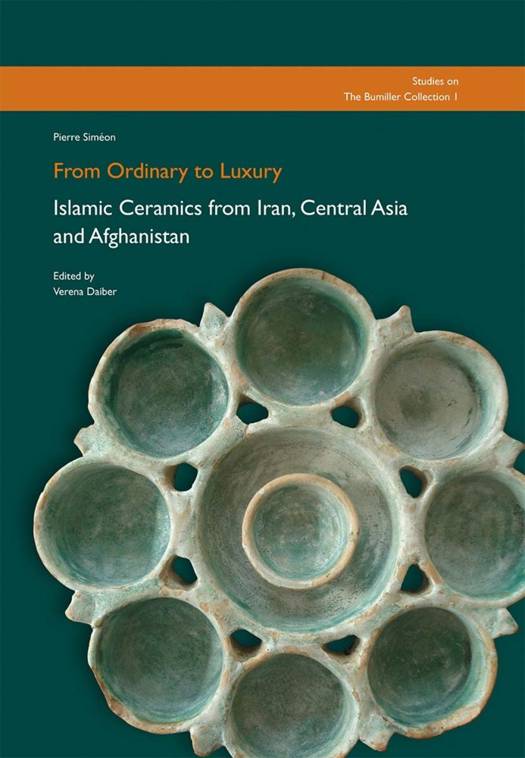
From Ordinary to Luxury
Islamic Ceramics from Iran, Central Asia and Afghanistan
Pierre Siméon
Livre relié | Anglais
83,45 €
+ 166 points
Description
188 pieces of glazed and unglazed pottery from The University Museum of Islamic Art are studied and grouped into categories of surface treatment. The collection's asset is its wide range of medieval material, geographically spreading from Iran through the today Central Asian republics as far as Afghanistan.
Apart from that it is made up of what we would call the more common performance of pottery. Siméon's archaeological approach to the material develops the material as a prime source of information on provenance, distribution and trade. Archaeological data furthermore provide answers to questions of the art historian on the development and diffusion of motifs, spread of techniques and the relationship to other materials. Through the mutual approach the author is able to explore social, economic and artistic aspects of historical societies.
The chapters are preceded by a short introduction by the category treated and, if the material allows, completed by a thorough discussion and analysis of the group. As such, the spheroconical vessels for example are comprehensively treated including a discussion of the archaeological and textual sources that for the first time allow a convincing interpretation of this particular group.
As far as possible attributions, comparisons and references also to unknown collections and finds even from remote sites top off the entry of each object and make it available for further study. To make the study complete, each object is described and thoroughly documented with a profile drawing and several colour photographs. Furthermore, the integration of the relevant bibliography including the Russian works that are inaccessible for most of the readers, but essential for the understanding of the material, gives new insights into the scholarly approach to Islamic ceramics from Central Asia.
The Collection was assembled by the late Manfred Bumiller (1928-2018) from 1981 on, originally planned as a collection of Iranian medieval metalwork, but soon completed by a considerable number of ceramics of different qualities. After a break of more than ten years Siméon's thorough and profound examination of material now studied in a comprehensive way launches the new series Studies on The Bumiller Collection that is dedicated to the exploration of the Museum's material. May it serve as a useful tool for whoever is interested in Eastern Islamic ceramics.
Apart from that it is made up of what we would call the more common performance of pottery. Siméon's archaeological approach to the material develops the material as a prime source of information on provenance, distribution and trade. Archaeological data furthermore provide answers to questions of the art historian on the development and diffusion of motifs, spread of techniques and the relationship to other materials. Through the mutual approach the author is able to explore social, economic and artistic aspects of historical societies.
The chapters are preceded by a short introduction by the category treated and, if the material allows, completed by a thorough discussion and analysis of the group. As such, the spheroconical vessels for example are comprehensively treated including a discussion of the archaeological and textual sources that for the first time allow a convincing interpretation of this particular group.
As far as possible attributions, comparisons and references also to unknown collections and finds even from remote sites top off the entry of each object and make it available for further study. To make the study complete, each object is described and thoroughly documented with a profile drawing and several colour photographs. Furthermore, the integration of the relevant bibliography including the Russian works that are inaccessible for most of the readers, but essential for the understanding of the material, gives new insights into the scholarly approach to Islamic ceramics from Central Asia.
The Collection was assembled by the late Manfred Bumiller (1928-2018) from 1981 on, originally planned as a collection of Iranian medieval metalwork, but soon completed by a considerable number of ceramics of different qualities. After a break of more than ten years Siméon's thorough and profound examination of material now studied in a comprehensive way launches the new series Studies on The Bumiller Collection that is dedicated to the exploration of the Museum's material. May it serve as a useful tool for whoever is interested in Eastern Islamic ceramics.
Spécifications
Parties prenantes
- Auteur(s) :
- Editeur:
Contenu
- Nombre de pages :
- 192
- Langue:
- Anglais
Caractéristiques
- EAN:
- 9783954903870
- Date de parution :
- 21-02-20
- Format:
- Livre relié
- Format numérique:
- Genaaid
- Dimensions :
- 216 mm x 302 mm
- Poids :
- 898 g


Seulement chez Librairie Club
+ 166 points sur votre carte client de Librairie Club
Cadeau


Les avis
Nous publions uniquement les avis qui respectent les conditions requises. Consultez nos conditions pour les avis.