


- Retrait en 2 heures
- Assortiment impressionnant
- Paiement sécurisé
- Toujours un magasin près de chez vous
- Retrait en 2 heures
- Assortiment impressionnant
- Paiement sécurisé
- Toujours un magasin près de chez vous



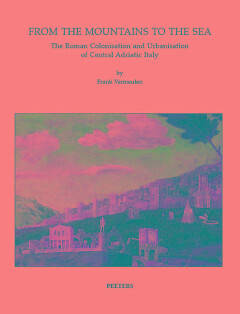
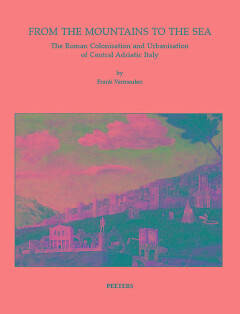
From the Mountains to the Sea
The Roman Colonisation and Urbanisation of Central Adriatic Italy
F Vermeulen
84,00 €
+ 168 points
Description
From the Mountains to the Sea proposes an innovative synthesis of recent archaeological research on town formation and urbanisation, and connected Roman colonisation, of the central part of Adriatic Italy. Frank Vermeulen analyses the formation and character of Roman towns in this still somewhat understudied area of central Italy, thus contributing to a better understanding of the lasting Roman impact on conquered societies in Italy as a whole. During the past decade much archaeological fieldwork has been conducted on urban sites in this area, including exciting field surveys, and it is now high time for a geographical and historical contextualisation of the more than 40 Roman urban sites known in this area, based on a careful review of the scholarly tradition and the bringing together of much new, often unpublished or preliminary published, field data. The result is the first comprehensive synthesis of the urban phenomenon in a region characterized by one of the most dense town networks of the Roman Empire. Some of the main sub-themes to discuss when dealing with Roman-inspired urbanism are present in this book, including: town formation, town planning, the structural relationship town-territory, religious aspects and urban sanctuaries, public buildings (fora, basilicae, baths, porticoes, theatres, amphitheatres, macella, etc.) and domestic architecture. But beyond the mostly archaeologically-driven investigation of architectural features of the colonies and all other towns in the study region, there is an attempt to understand the disposition and functioning of all the individual town centres in their wider context of territory, region and state. An additional important feature of the book is the gazetteer of urban sites which forms a starting point for all those working in Roman Italy.
Spécifications
Parties prenantes
- Auteur(s) :
- Editeur:
Contenu
- Nombre de pages :
- 232
- Langue:
- Anglais
- Collection :
- Tome:
- n° 30
Caractéristiques
- EAN:
- 9789042934702
- Date de parution :
- 24-03-17
- Format:
- Livre broché
- Format numérique:
- Trade paperback (VS)
- Dimensions :
- 211 mm x 272 mm
- Poids :
- 657 g


Seulement chez Librairie Club
+ 168 points sur votre carte client de Librairie Club
Cadeau


Les avis
Nous publions uniquement les avis qui respectent les conditions requises. Consultez nos conditions pour les avis.