


En raison d'une grève chez bpost, des retards de livraison peuvent survenir. Besoin de quelque chose en urgence ? Optez pour un retrait en magasin ou rendez-vous dans une Librairie Club à proximité.
- Retrait en 2 heures
- Assortiment impressionnant
- Paiement sécurisé
- Toujours un magasin près de chez vous
En raison d'une grève chez bpost, des retards de livraison peuvent survenir. Besoin de quelque chose en urgence ? Optez pour un retrait en magasin ou rendez-vous dans une Librairie Club à proximité.
- Retrait en 2 heures
- Assortiment impressionnant
- Paiement sécurisé
- Toujours un magasin près de chez vous



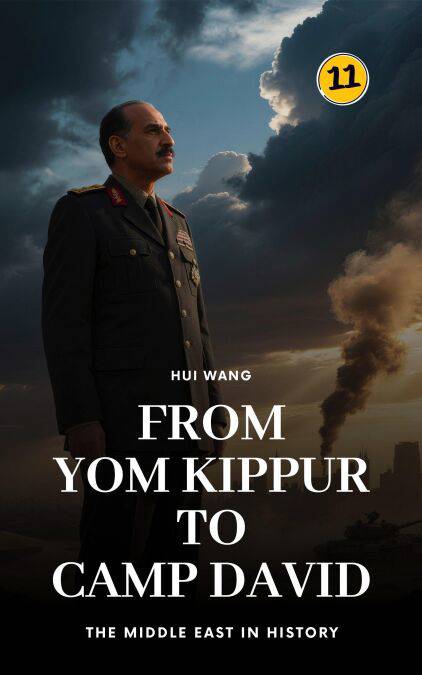
From Yom Kippur to Camp David: The Middle East in History EBOOK
The Middle East in History, #11
Hui Wang
6,99 €
Description
From Yom Kippur to Camp David: The Middle East in History, is my attempt to tell the story of the modern Middle East through the people who were forced to make impossible choices. Gamal Abdel Nasser, Anwar Sadat, Golda Meir, Menachem Begin, Henry Kissinger, King Faisal, King Hussein, Richard Nixon, and Jimmy Carter are not presented here as distant legends on a page. They appear as real, flawed actors caught in moments when delay, pride, or a single misjudgment could shove the region into war—or pull it back from the brink.
The book moves from the shock of the 1972 Munich Olympics massacre to the ignored warnings that preceded the Yom Kippur War, and along the secret, consequential paths that drew Egypt and Israel back onto the battlefield. Readers are taken inside Operation Badr — the daring crossing of the Suez Canal that shattered the Bar-Lev Line — into the chaos of tank battles in the Valley of Tears, and into Ariel Sharon's risky, high-stakes maneuver at the Chinese Farm. These chapters are less about heroic slogans and more about confusion, fear, and the brutal speed at which history can turn.
War, though, is only part of the story. I trace how the conflict spilled into Washington and Moscow and into living rooms around the globe. When King Faisal helped lead the Arab oil embargo in 1973, energy instantly became a political blunt instrument — not the act of one man alone but of a coalition of oil-producing states — and overnight the balance of power shifted. The embargo, the ensuing energy crisis, and those harsh winters of rationing and blackout scares laid bare how deeply the Middle East had come to touch everyday life far beyond its borders. Diplomacy, money, and control of energy proved as decisive as tanks and aircraft.
Inside Egypt and Israel, the pressure looked different but was no less severe. Sadat's deliberate break with Nasser's legacy — his diplomatic pivot and his economic opening, the infitah — carried big hopes and big risks. Cuts to subsidies and the strains of reform fed bread shortages and, two years later, the 1977 bread riots, while shortages in schools and public services sharpened popular anger. In Israel, the rise of Likud upended decades of Labor dominance, reshaped domestic politics, and forced a rethinking of what "peace" might mean politically and practically. Those internal battles mattered as much as any front line — leaders were fighting enemies abroad while losing patience and trust at home.
The journey from Jerusalem to Camp David was anything but a smooth march toward peace. It was tense, personal, and shot through with uncertainty. This book doesn't ask you to admire every decision by Anwar Sadat, Menachem Begin, or Jimmy Carter; it asks you to see how fragile the path really was, how few exits there were, and why the price of peace in the Middle East was paid not merely in treaties—but in isolation, fury, and blood.
Spécifications
Parties prenantes
- Auteur(s) :
- Editeur:
Contenu
- Langue:
- Anglais
- Collection :
Caractéristiques
- EAN:
- 9789190115947
- Date de parution :
- 11-01-26
- Format:
- Ebook
- Protection digitale:
- /
- Format numérique:
- ePub



Seulement chez Librairie Club
Cadeau


Les avis
Nous publions uniquement les avis qui respectent les conditions requises. Consultez nos conditions pour les avis.