


- Retrait en 2 heures
- Assortiment impressionnant
- Paiement sécurisé
- Toujours un magasin près de chez vous
- Retrait en 2 heures
- Assortiment impressionnant
- Paiement sécurisé
- Toujours un magasin près de chez vous



50,95 €
+ 101 points
Description
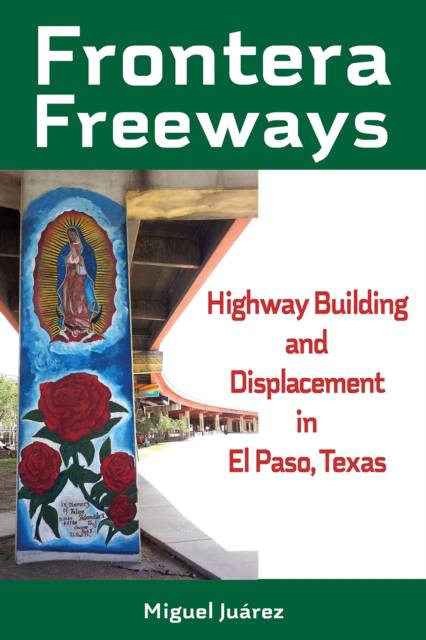
The history of how the freeways of El Paso, Texas, were constructed, who lobbied for them to be built, who was displaced, and who opposed them, is largely unknown. Regional studies of highway building have been overlooked in most studies of Mexican American history. As in other Mexican American cities like San Antonio, Houston, Dallas, and Los Angeles, Mexican Americans who were displaced by highway building were not at the table. From 1915 to the 1960s, numerous road projects displaced people and neighborhoods using processes that were largely unknown to them. Frontera Freeways explores the origins, development, and dismantling of a major barrio in the Texas city of El Paso. Miguel Juárez uses the case study of the Lincoln Park neighborhood, which emerged from the Village of Concordia, to analyze highway building in the region. It is at Lincoln Park where all of El Paso's early freeways converge; thus, the community is also the focal point or ground zero of this study. The Lincoln Park Conservation Committee led the community in countering highway building in order to save Lincoln Park School, a former Mexican school in segregated El Paso and the city's only cultural arts center before its closure in 2006. Frontera Freeways mirrors the reclamation of Chicana/o spaces, like Chicano Park under the Coronado Bridge in San Diego, California, and incorporates Mexican American history, urban history, and regional planning. It also explores sociological aspects of race and the built environment in a borderlands context of racial histories, with a focus on African American and Latinx neighborhoods. Finally, Juárez reveals the historical memories of these communities and presents their art and social protest as a form of community engagement and mobilization.
Spécifications
Parties prenantes
- Auteur(s) :
- Editeur:
Contenu
- Nombre de pages :
- 208
- Langue:
- Anglais
- Collection :
Caractéristiques
- EAN:
- 9781574419795
- Date de parution :
- 19-11-25
- Format:
- Livre relié
- Format numérique:
- Genaaid
- Dimensions :
- 160 mm x 231 mm
- Poids :
- 453 g


Seulement chez Librairie Club
+ 101 points sur votre carte client de Librairie Club
Cadeau


Les avis
Nous publions uniquement les avis qui respectent les conditions requises. Consultez nos conditions pour les avis.