


- Retrait en 2 heures
- Assortiment impressionnant
- Paiement sécurisé
- Toujours un magasin près de chez vous
- Retrait en 2 heures
- Assortiment impressionnant
- Paiement sécurisé
- Toujours un magasin près de chez vous



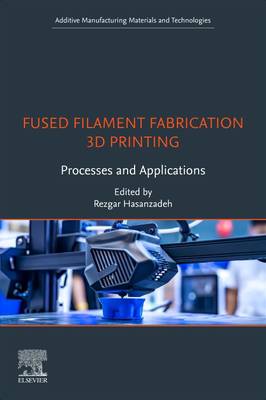
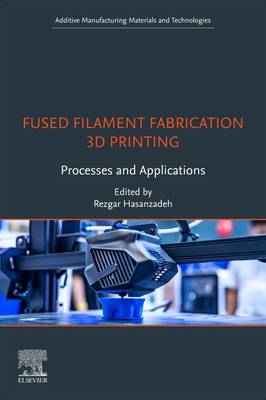
Fused Filament Fabrication 3D Printing
Processes and Applications
331,95 €
+ 663 points
Description
Fused Filament Fabrication 3D Printing: Processes and Applications overviews fused filament fabrication additive manufacturing, highlighting the advantages, limitations, and unique strengths of this 3D printing method. Key process parameters essential for effective slicing and printing of 3D objects are covered, including methods for optimizing these parameters, particularly when working with composite filaments. The mechanical properties of printed parts, with an emphasis on tensile and impact strength performance are discussed, as are design considerations, strategies to mitigate the key limitations of the technique, and analysis of how various FFF process parameters affect the mechanical and morphological properties of the printed parts. Case studies and applications are also included, highlighting the use of FFF technology in biomedicine and tissue engineering, shape memory polymers, acoustic insulation, and auxetic structures with tailored mechanical responses.
Spécifications
Parties prenantes
- Editeur:
Contenu
- Nombre de pages :
- 500
- Langue:
- Anglais
- Collection :
Caractéristiques
- EAN:
- 9780443452239
- Date de parution :
- 15-10-26
- Format:
- Livre broché
- Format numérique:
- Trade paperback (VS)
- Dimensions :
- 152 mm x 229 mm
- Poids :
- 449 g

Seulement chez Librairie Club
+ 663 points sur votre carte client de Librairie Club
Cadeau


Les avis
Nous publions uniquement les avis qui respectent les conditions requises. Consultez nos conditions pour les avis.