


En raison d'une grève chez bpost, des retards de livraison peuvent survenir. Besoin de quelque chose en urgence ? Optez pour un retrait en magasin ou rendez-vous dans une Librairie Club à proximité.
- Retrait en 2 heures
- Assortiment impressionnant
- Paiement sécurisé
- Toujours un magasin près de chez vous
En raison d'une grève chez bpost, des retards de livraison peuvent survenir. Besoin de quelque chose en urgence ? Optez pour un retrait en magasin ou rendez-vous dans une Librairie Club à proximité.
- Retrait en 2 heures
- Assortiment impressionnant
- Paiement sécurisé
- Toujours un magasin près de chez vous



Description
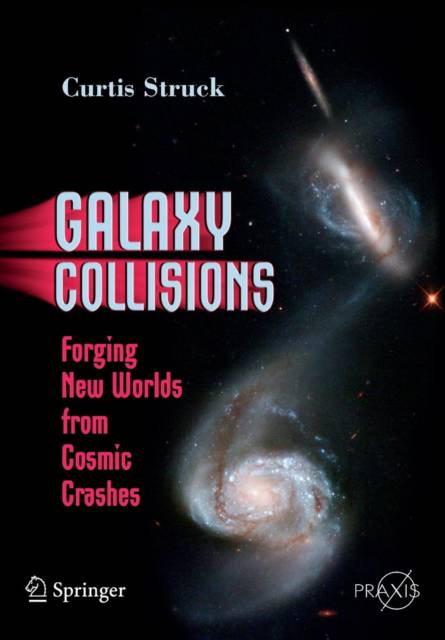
The spectacular images of galaxy collisions capture the imagination. This book will show what is out there in the universe, what it's like in other galaxies, what they might look like, and how cosmic processes might affect life in other solar systems. It will explain crucial stages in the development of physical structure in the universe, and the effect of galaxy scale processes. Professor Struck will explore all the issues surrounding galaxy collisions. He will begin with a brief broad review of the background on galaxies, the history of their discovery, and how this has been driven by steadily improving technology. Chapters 2 gives details of the early stages of different types of galaxy collision - Rings of Fire, Tidal Swings and Retrograde and Sideways Reels - while Chapter 3 describes collisions between galaxies of very different masses: minor merger or dwarf destruction. Chapter 4 covers ultra-luminous infrared galaxies and major mergers and Chapter 5 briefly examines the techniques used for computer simulation results and how increasing computer capacity has affected the development of this field. The following chapter looks at understanding the physical processes of triggered star formation and nuclear activity. Chapters 7-9 look at the broader view of cosmological structure growth which determines the environment and conditions in which galaxy collisions occur. In the densest environments, this process repeats itself on the larger scale of galaxy clusters. The concluding chapter considers what a galaxy collision looks like from a solar system like ours. Although the galaxy is completely restructured and the night sky view would change greatly over the course of several hundred million years, the direct effects on our planet would be few and infrequent, with only a small probability of being truly catastrophic. These issues will be explored along with the ideas that galaxies must reach a certain evolutionary "maturity" before they can even form solarsystems, and that there are habitable zones within galaxies. Thus, galaxy scale processes, like collisions, can determine the fate of life on Earth-like planets.
Spécifications
Parties prenantes
- Auteur(s) :
- Editeur:
Contenu
- Nombre de pages :
- 285
- Langue:
- Anglais
- Collection :
Caractéristiques
- EAN:
- 9780387853703
- Date de parution :
- 03-02-11
- Format:
- Livre broché
- Format numérique:
- Trade paperback (VS)
- Dimensions :
- 168 mm x 239 mm
- Poids :
- 680 g


Seulement chez Librairie Club
+ 92 points sur votre carte client de Librairie Club
Cadeau


Les avis
Nous publions uniquement les avis qui respectent les conditions requises. Consultez nos conditions pour les avis.