


- Retrait en 2 heures
- Assortiment impressionnant
- Paiement sécurisé
- Toujours un magasin près de chez vous
- Retrait en 2 heures
- Assortiment impressionnant
- Paiement sécurisé
- Toujours un magasin près de chez vous



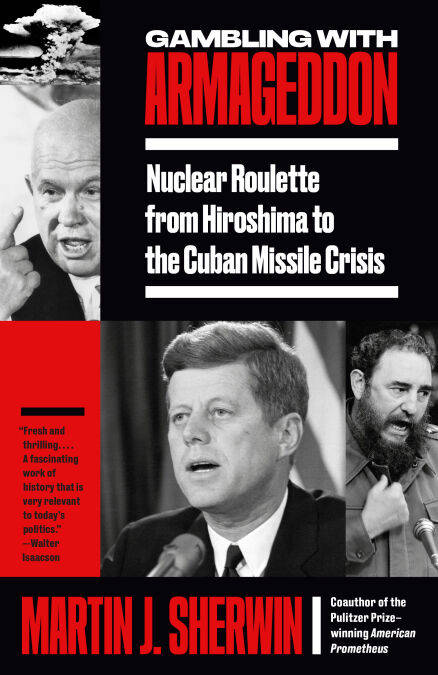
Gambling with Armageddon EBOOK
Nuclear Roulette from Hiroshima to the Cuban Missile Crisis
Martin J. Sherwin
Ebook | Anglais
17,34 €
+ 17 points
Description
From the Pulitzer Prize-winning author of American Prometheus comes the first effort to set the Cuban Missile Crisis, with its potential for nuclear holocaust, in a wider historical narrative of the Cold War—how such a crisis arose, and why at the very last possible moment it didn't happen.
In this groundbreaking look at the Cuban Missile Crisis, Martin Sherwin not only gives us a riveting sometimes hour-by-hour explanation of the crisis itself, but also explores the origins, scope, and consequences of the evolving place of nuclear weapons in the post-World War II world. Mining new sources and materials, and going far beyond the scope of earlier works on this critical face-off between the United States and the Soviet Union—triggered when Khrushchev began installing missiles in Cuba at Castro's behest—Sherwin shows how this volatile event was an integral part of the wider Cold War and was a consequence of nuclear arms.
Gambling with Armageddon looks in particular at the original debate in the Truman Administration about using the Atomic Bomb; the way in which President Eisenhower relied on the threat of massive retaliation to project U.S. power in the early Cold War era; and how President Kennedy, though unprepared to deal with the Bay of Pigs debacle, came of age during the Cuban Missile Crisis. Here too is a clarifying picture of what was going on in Khrushchev's Soviet Union.
Martin Sherwin has spent his career in the study of nuclear weapons and how they have shaped our world. Gambling with Armegeddon is an outstanding capstone to his work thus far.
In this groundbreaking look at the Cuban Missile Crisis, Martin Sherwin not only gives us a riveting sometimes hour-by-hour explanation of the crisis itself, but also explores the origins, scope, and consequences of the evolving place of nuclear weapons in the post-World War II world. Mining new sources and materials, and going far beyond the scope of earlier works on this critical face-off between the United States and the Soviet Union—triggered when Khrushchev began installing missiles in Cuba at Castro's behest—Sherwin shows how this volatile event was an integral part of the wider Cold War and was a consequence of nuclear arms.
Gambling with Armageddon looks in particular at the original debate in the Truman Administration about using the Atomic Bomb; the way in which President Eisenhower relied on the threat of massive retaliation to project U.S. power in the early Cold War era; and how President Kennedy, though unprepared to deal with the Bay of Pigs debacle, came of age during the Cuban Missile Crisis. Here too is a clarifying picture of what was going on in Khrushchev's Soviet Union.
Martin Sherwin has spent his career in the study of nuclear weapons and how they have shaped our world. Gambling with Armegeddon is an outstanding capstone to his work thus far.
Spécifications
Parties prenantes
- Auteur(s) :
- Editeur:
Contenu
- Nombre de pages :
- 624
- Langue:
- Anglais
Caractéristiques
- EAN:
- 9780525659310
- Date de parution :
- 12-10-20
- Format:
- Ebook
- Protection digitale:
- Adobe DRM
- Format numérique:
- ePub


Seulement chez Librairie Club
+ 17 points sur votre carte client de Librairie Club
Cadeau


Les avis
Nous publions uniquement les avis qui respectent les conditions requises. Consultez nos conditions pour les avis.