

- Retrait en 2 heures
- Assortiment impressionnant
- Paiement sécurisé
- Toujours un magasin près de chez vous
- Retrait gratuit dans votre magasin Club
- 7.000.0000 titres dans notre catalogue
- Payer en toute sécurité
- Toujours un magasin près de chez vous

Description
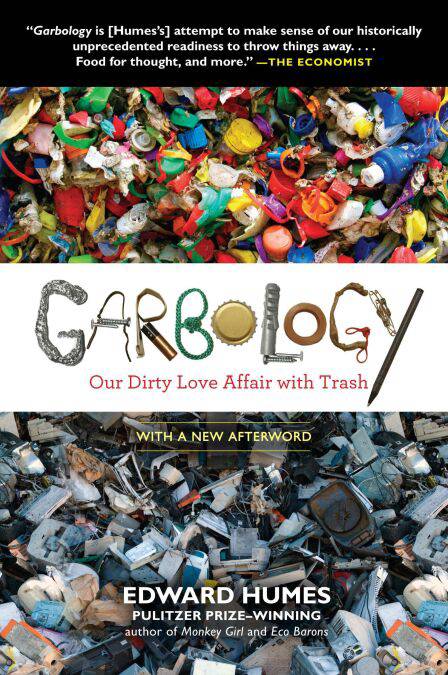
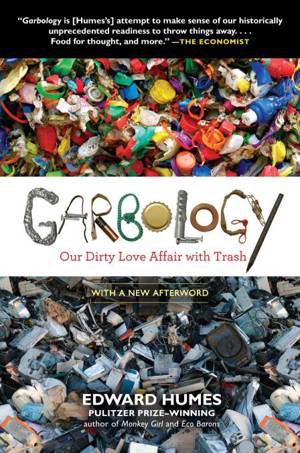
A Pulitzer Prize–winning journalist takes readers on a surprising tour of the world of garbage.
Take a journey inside the secret world of our biggest export, our most prodigious product, and our greatest legacy: our trash. It’s the biggest thing we make: The average American is on track to produce a whopping 102 tons of garbage across a lifetime, $50 billion in squandered riches rolled to the curb each year, more than that produced by any other people in the world. But that trash doesn’t just magically disappear; our bins are merely the starting point for a strange, impressive, mysterious, and costly journey that may also represent the greatest untapped opportunity of the century.
In Garbology, Pulitzer Prize–winning author Edward Humes investigates the trail of that 102 tons of trash—what’s in it; how much we pay for it; how we manage to create so much of it; and how some families, communities, and even nations are finding a way back from waste to discover a new kind of prosperity. Along the way , he introduces a collection of garbage denizens unlike anyone you’ve ever met: the trash-tracking detectives of MIT, the bulldozer-driving sanitation workers building Los Angeles’ immense Garbage Mountain landfill, the artists in residence at San Francisco’s dump, and the family whose annual trash output fills not a dumpster or a trash can, but a single mason jar.
Garbology digs through our epic piles of trash to reveal not just what we throw away, but who we are and where our society is headed. Are we destined to remain the country whose number-one export is scrap—America as China’s trash compactor—or will the country that invented the disposable economy pioneer a new and less wasteful path? The real secret at the heart of Garbology may well be the potential for a happy ending buried in our landfill. Waste, Humes writes, is the one environmental and economic harm that ordinary working Americans have the power to change—and prosper in the process.
Take a journey inside the secret world of our biggest export, our most prodigious product, and our greatest legacy: our trash. It’s the biggest thing we make: The average American is on track to produce a whopping 102 tons of garbage across a lifetime, $50 billion in squandered riches rolled to the curb each year, more than that produced by any other people in the world. But that trash doesn’t just magically disappear; our bins are merely the starting point for a strange, impressive, mysterious, and costly journey that may also represent the greatest untapped opportunity of the century.
In Garbology, Pulitzer Prize–winning author Edward Humes investigates the trail of that 102 tons of trash—what’s in it; how much we pay for it; how we manage to create so much of it; and how some families, communities, and even nations are finding a way back from waste to discover a new kind of prosperity. Along the way , he introduces a collection of garbage denizens unlike anyone you’ve ever met: the trash-tracking detectives of MIT, the bulldozer-driving sanitation workers building Los Angeles’ immense Garbage Mountain landfill, the artists in residence at San Francisco’s dump, and the family whose annual trash output fills not a dumpster or a trash can, but a single mason jar.
Garbology digs through our epic piles of trash to reveal not just what we throw away, but who we are and where our society is headed. Are we destined to remain the country whose number-one export is scrap—America as China’s trash compactor—or will the country that invented the disposable economy pioneer a new and less wasteful path? The real secret at the heart of Garbology may well be the potential for a happy ending buried in our landfill. Waste, Humes writes, is the one environmental and economic harm that ordinary working Americans have the power to change—and prosper in the process.
Spécifications
Parties prenantes
- Auteur(s) :
- Editeur:
Contenu
- Nombre de pages :
- 336
- Langue:
- Anglais
Caractéristiques
- EAN:
- 9781101580370
- Date de parution :
- 18-04-12
- Format:
- Ebook
- Protection digitale:
- Adobe DRM
- Format numérique:
- ePub


Seulement chez Librairie Club
+ 5 points sur votre carte client de Librairie Club
Cadeau

Cadeau


Les avis
Nous publions uniquement les avis qui respectent les conditions requises. Consultez nos conditions pour les avis.