


- Retrait en 2 heures
- Assortiment impressionnant
- Paiement sécurisé
- Toujours un magasin près de chez vous
- Retrait en 2 heures
- Assortiment impressionnant
- Paiement sécurisé
- Toujours un magasin près de chez vous



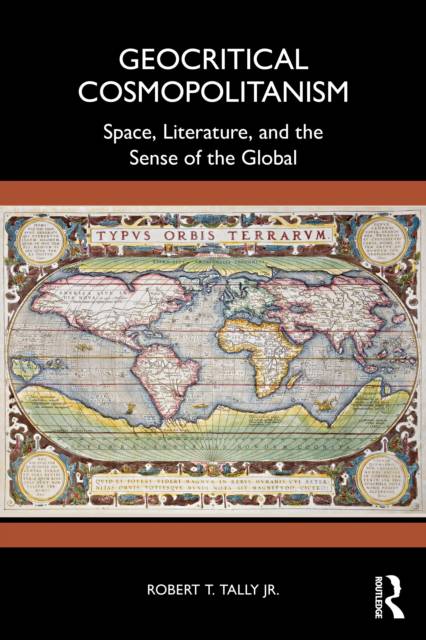
Geocritical Cosmopolitanism
Space, Literature, and the Sense of the Global
Robert T Tally Jr
Livre broché | Anglais
56,95 €
+ 113 points
Format
Description
Is the world a place? As its inhabitants, we belong to the world, with its increasingly interconnected systems and cultures, but the cosmopolitanism of our daily lives is often hidden from view. In this innovative study, Robert T. Tally Jr. challenges our fundamental understanding of what constitutes the "world" in an age of shifting spatial boundaries.
The conception of the "world" profoundly influences the ways we imagine space and place, and the negotiation of worldly spaces presents challenges to traditional means of mapping or making sense of one's place. Indeed, the timing of the "spatial turn" correlates with an enhanced consideration of processes and effects of globalization, which in turn has led to a dramatic increase in awareness of world literature. These phenomena engender a more cosmopolitan character to all aspects of human experience, along with a dialectical counterpart seen in the retrenchment of various nationalisms or greater emphases on local cultural formations. All of which pose challenges to the already vexing crisis of representation in late capitalist postmodernity and its accompanying anxieties. Geocritical Cosmopolitanism: Space, Literature, and the Sense of the Global confronts problems associated with mapping this world-system in relation to our understanding and experience of spatiality, intercultural dialogue, and cosmopolitanism in an era of ever more complex processes of globalization.
This is essential reading for readers interested in world literature, globalization, urban studies, geocriticism, and the spatial humanities more broadly.
Spécifications
Parties prenantes
- Auteur(s) :
- Editeur:
Contenu
- Nombre de pages :
- 204
- Langue:
- Anglais
Caractéristiques
- EAN:
- 9781041198604
- Date de parution :
- 24-08-26
- Format:
- Livre broché
- Format numérique:
- Trade paperback (VS)
- Dimensions :
- 156 mm x 233 mm



Seulement chez Librairie Club
+ 113 points sur votre carte client de Librairie Club
Cadeau


Les avis
Nous publions uniquement les avis qui respectent les conditions requises. Consultez nos conditions pour les avis.