


En raison d'une grève chez bpost, des retards de livraison peuvent survenir. Besoin de quelque chose en urgence ? Optez pour un retrait en magasin ou rendez-vous dans une Librairie Club à proximité.
- Retrait en 2 heures
- Assortiment impressionnant
- Paiement sécurisé
- Toujours un magasin près de chez vous
En raison d'une grève chez bpost, des retards de livraison peuvent survenir. Besoin de quelque chose en urgence ? Optez pour un retrait en magasin ou rendez-vous dans une Librairie Club à proximité.
- Retrait en 2 heures
- Assortiment impressionnant
- Paiement sécurisé
- Toujours un magasin près de chez vous



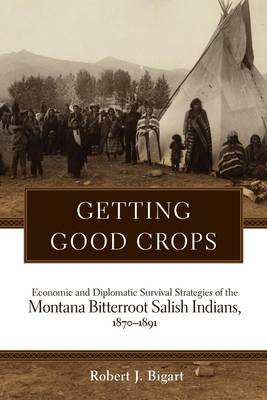
Getting Good Crops
Economic and Diplomatic Survival Strategies of the Montana Bitterroot Salish Indians, 1870-1891
Robert J Bigart
Livre relié | Anglais
67,95 €
+ 135 points
Description
Tells how one American Indian tribe survived despite overwhelming challenges
In 1870, the Bitterroot Salish Indians--called "Flatheads" by the first white explorers to encounter them--were a small tribe living on the western slope of the Northern Rocky Mountains in Montana Territory. Pressures on the Salish were intensifying during this time, from droughts and dwindling resources to aggressive neighboring tribes and Anglo-American expansion. In 1891, the economically impoverished Salish accepted government promises of assistance and retreated to the Flathead Reservation, more than sixty miles from their homeland.
In Getting Good Crops, Robert J. Bigart examines the full range of available sources to explain how the Salish survived into the twentieth century, despite their small numbers, their military disadvantages, and the aggressive invasion of white settlers who greedily devoured their land and its natural resources.
Bigart argues that a key to the survival of the Salish, from the early nineteenth century onward, was their diplomatic agility and willingness to form strategic alliances and friendships with non-Salish peoples. In doing so, the Salish navigated their way through multiple crises, relying more on their wits than on force. The Salish also took steps to sustain themselves economically. Although hunting and gathering had been their mainstay for centuries, the Salish began farming -- "getting good crops" -- to feed themselves because buffalo were becoming increasingly scarce.
Raised on the Flathead Reservation himself, the author is seeking to convey the Salish story from their perspective, despite the paucity of written Salish testimony. What emerges is a picture -- both inspiring and heartbreaking-- of a people maintaining autonomy against all odds.
Spécifications
Parties prenantes
- Auteur(s) :
- Editeur:
Contenu
- Nombre de pages :
- 304
- Langue:
- Anglais
Caractéristiques
- EAN:
- 9780806141336
- Date de parution :
- 10-09-10
- Format:
- Livre relié
- Format numérique:
- Genaaid
- Dimensions :
- 147 mm x 231 mm
- Poids :
- 521 g


Seulement chez Librairie Club
+ 135 points sur votre carte client de Librairie Club
Cadeau


Les avis
Nous publions uniquement les avis qui respectent les conditions requises. Consultez nos conditions pour les avis.