


- Retrait en 2 heures
- Assortiment impressionnant
- Paiement sécurisé
- Toujours un magasin près de chez vous
- Retrait en 2 heures
- Assortiment impressionnant
- Paiement sécurisé
- Toujours un magasin près de chez vous



115,45 €
+ 230 points
Format
Description
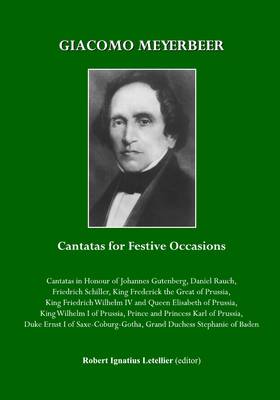
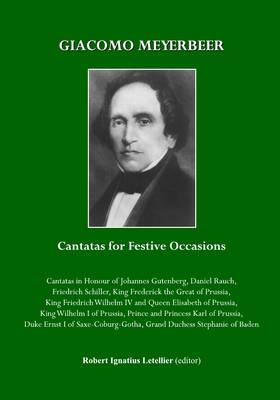
The cantatas of Giacomo Meyerbeer (1791-1864), spanning his middle and late life, were written in response to royal and civic commissions to celebrate dynastic events and to praise the deeds of famous men. Their festive nature is indicated in the titles: festival song, festival greeting, festival hymn, homage. Like a continuation of the 18th-century tradition of patronage, the more famous Meyerbeer became, the more his services were required by public authorities. Although a burden to him, and a distraction from his dramatic vocation, the composer understood the importance of these works for his life and public perception-especially in Germany, where his Jewishness was always a source of comment. His special relationship with the Prussian Royal Family was one of the most significant features of his life-as it was for Felix Mendelssohn. Meyerbeer's cantatas can be divided into Royal commissions and civic/national ones. There are royal birthdays (the Duke of Saxe-Coburg-Gotha, the Grand Duchess of Baden), weddings (Princess Louise of Prussia), marriage anniversaries (King Friedrich Wilhelm IV and Prince Karl of Prussia), coronations (King Wilhelm I) and state visits (Queen Victoria). These are parallelled by commemoration of historical events and personages-the invention of printing (1436) by Johannes Gutenberg (1397-1468), commemoration of the Prussian national hero Frederick the Great (1712-1786), the unveiling of the monumental equestrian statue of the famous king by the great sculptor Christian Daniel Rauch (1777-1857), and the commemoration of the centenary of the birth of the illustrious dramatic poet and chronicler of idealism and freedom, Friedrich Schiller (1759-1805). In all of these works, Meyerbeer's powers of lyric beauty, dramatic perception, orchestral colour and drama, and sense of pomp and circumstance, are amply in evidence. They reveal a side to this great operatic composer that has been completely forgotten, and now awaits discovery. This collection, including both published vocal and full scores, contains the unpublished cantata written for Ernst I, Duke of Saxe-Coburg-Gotha (b.1784, ruled 1806-1844), the father of Prince Albert the Prince Consort of Queen Victoria.
Spécifications
Parties prenantes
- Auteur(s) :
- Editeur:
Contenu
- Nombre de pages :
- 270
- Langue:
- Anglais
Caractéristiques
- EAN:
- 9781443823234
- Date de parution :
- 23-12-10
- Format:
- Livre broché
- Format numérique:
- Trade paperback (VS)
- Dimensions :
- 208 mm x 292 mm
- Poids :
- 680 g


Seulement chez Librairie Club
+ 230 points sur votre carte client de Librairie Club
Cadeau


Les avis
Nous publions uniquement les avis qui respectent les conditions requises. Consultez nos conditions pour les avis.