


- Retrait en 2 heures
- Assortiment impressionnant
- Paiement sécurisé
- Toujours un magasin près de chez vous
- Retrait gratuit dans votre magasin Club
- 7.000.0000 titres dans notre catalogue
- Payer en toute sécurité
- Toujours un magasin près de chez vous



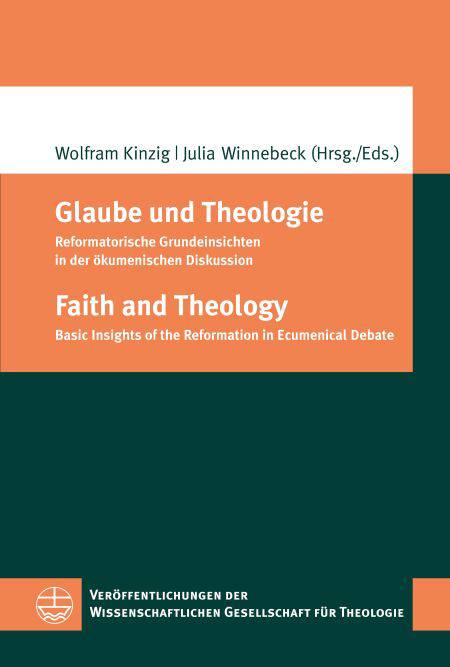
Glaube und Theologie / Faith and Theology EBOOK
Ebook | Anglais, Allemand | Veröffentlichungen der Wissenschaftlichen Gesellschaft für Theologie (VWGTh)
44,99 €
+ 44 points
Format
Description
Glaube und Theologie stehen seit den Anfängen des Christentums in produktiver Spannung zueinander, die die Reformation mit ihrem Prinzip des sola fide einerseits und mit ihrer Institutionalisierung einer schriftzentrierten akademischen Theologie andererseits in besonderer Weise aktualisiert hat. Dadurch entwickelte sich in den neu entstandenen Evangelisch-theologischen Fakultäten eine "wissenschaftliche Theologie" auf höchstem Niveau, die weltweit rezipiert wurde. Diese Theologie sieht sich allerdings in jüngster Zeit kritischen Anfragen ausgesetzt. Säkularisierungsprozesse führen zu einem massiven religiösen Bildungsverlust und damit zu einer Trivialisierung von Theologie. Zeitgleich breiten sich weltweit christliche Gruppen aus, die auf eine akademische theologische Ausbildung keinen Wert legen. In Anbetracht dieser Situation entsteht die Frage, inwiefern die Theologie reformatorischer Tradition auch in Zukunft religionsproduktiv sein und eine für die Kirchen grundlegende Arbeit leisten kann.
Um diese Frage zu diskutieren, trafen sich auf Einladung des Evangelisch-Theologischen Fakultätentages, der Wissenschaftlichen Gesellschaft für Theologie und der Evangelischen Kirche in Deutschland im Oktober 2017 Theologinnen und Theologen unterschiedlicher christlicher Konfessionen in Wittenberg zu einer internationalen Konferenz. Deren wegweisende Beiträge sind in diesem Band veröffentlicht.
Since the beginnings of Christianity, there has been a fundamental tension between faith and theology. The Reformation, with its principle of sola fide on the one hand and its institutionalisation of a scripture-based academic theology on the other hand, drew particular attention to the tension and suggested new answers to that problem. That effort contributed to a fundamental transformation of academic theology within the faculties of Protestant Theology which emerged as a result of the movement. In the past decades, however, academic theology has come under considerable pressure.
[In much of Europe and North America,] The process of secularization has led to a massive decline in religious education and – partially as a reaction to this – to a trivialization of academic theology. At the same time, one can observe a global proliferation of evangelical and Pentecostal groups. These groups sometimes display a certain indifference towards academic theological training, or even reject it altogether. In view of this development the question arises to what extent the relationship between faith and theology as defined in the wake of the Reformation will in future continue to be religiously productive and may thus serve the churches and their congregations.
Um diese Frage zu diskutieren, trafen sich auf Einladung des Evangelisch-Theologischen Fakultätentages, der Wissenschaftlichen Gesellschaft für Theologie und der Evangelischen Kirche in Deutschland im Oktober 2017 Theologinnen und Theologen unterschiedlicher christlicher Konfessionen in Wittenberg zu einer internationalen Konferenz. Deren wegweisende Beiträge sind in diesem Band veröffentlicht.
Since the beginnings of Christianity, there has been a fundamental tension between faith and theology. The Reformation, with its principle of sola fide on the one hand and its institutionalisation of a scripture-based academic theology on the other hand, drew particular attention to the tension and suggested new answers to that problem. That effort contributed to a fundamental transformation of academic theology within the faculties of Protestant Theology which emerged as a result of the movement. In the past decades, however, academic theology has come under considerable pressure.
[In much of Europe and North America,] The process of secularization has led to a massive decline in religious education and – partially as a reaction to this – to a trivialization of academic theology. At the same time, one can observe a global proliferation of evangelical and Pentecostal groups. These groups sometimes display a certain indifference towards academic theological training, or even reject it altogether. In view of this development the question arises to what extent the relationship between faith and theology as defined in the wake of the Reformation will in future continue to be religiously productive and may thus serve the churches and their congregations.
Spécifications
Parties prenantes
- Editeur:
Contenu
- Nombre de pages :
- 388
- Langue:
- Anglais, Allemand
- Collection :
Caractéristiques
- EAN:
- 9783374058082
- Date de parution :
- 30-07-19
- Format:
- Ebook
- Protection digitale:
- Digital watermarking
- Format numérique:
- ePub


Seulement chez Librairie Club
+ 44 points sur votre carte client de Librairie Club
Concours


Les avis
Nous publions uniquement les avis qui respectent les conditions requises. Consultez nos conditions pour les avis.