Club utilise des cookies et des technologies similaires pour faire fonctionner correctement le site web et vous fournir une meilleure expérience de navigation.
Ci-dessous vous pouvez choisir quels cookies vous souhaitez modifier :
Club utilise des cookies et des technologies similaires pour faire fonctionner correctement le site web et vous fournir une meilleure expérience de navigation.
Nous utilisons des cookies dans le but suivant :
Assurer le bon fonctionnement du site web, améliorer la sécurité et prévenir la fraude
Avoir un aperçu de l'utilisation du site web, afin d'améliorer son contenu et ses fonctionnalités
Pouvoir vous montrer les publicités les plus pertinentes sur des plateformes externes
Club utilise des cookies et des technologies similaires pour faire fonctionner correctement le site web et vous fournir une meilleure expérience de navigation.
Ci-dessous vous pouvez choisir quels cookies vous souhaitez modifier :
Cookies techniques et fonctionnels
Ces cookies sont indispensables au bon fonctionnement du site internet et vous permettent par exemple de vous connecter. Vous ne pouvez pas désactiver ces cookies.
Cookies analytiques
Ces cookies collectent des informations anonymes sur l'utilisation de notre site web. De cette façon, nous pouvons mieux adapter le site web aux besoins des utilisateurs.
Cookies marketing
Ces cookies partagent votre comportement sur notre site web avec des parties externes, afin que vous puissiez voir des publicités plus pertinentes de Club sur des plateformes externes.
Une erreur est survenue, veuillez réessayer plus tard.
Il y a trop d’articles dans votre panier
Vous pouvez encoder maximum 250 articles dans votre panier en une fois. Supprimez certains articles de votre panier ou divisez votre commande en plusieurs commandes.
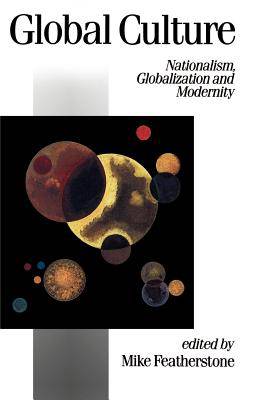
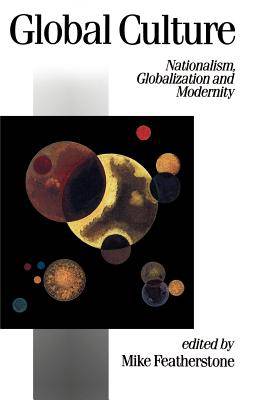
More than ever before, people, ideas, commodities, money, and information are moving freely across national frontiers. And as this occurs, it gives rise to several significant questions: Is a unified world culture emerging? If so, how will this affect the autonomy of existing cultures? Will they be supplanted by a unified culture, or can they maintain distinct identities? In this provocative volume, internationally recognized social scientists explore these questions and assess the impact--both positive and negative--of an emerging global culture. Many different explanations are put forth to explain the trends toward global unification, as well as their relation to an economic world system. The contributors also examine the emergence of "third cultures," such as international law, the financial markets, and mass media conglomerates, as elements which transcend national boundaries. And, in addition to analyzing the extent, causation, and consequences of a global culture, the contributors consider its implication for the social sciences. Global Culture will interest all scholars interested in political science, cultural studies, world-systems, development studies, and sociology. "Appadurai′s article ′Disjunction and Difference in the Global Cultural Economy′ does an excellent job of presenting five theoretical dimensions along which culture is transmitted from one society to another. . . . An insightful view into the question of global culture. Contributes to the reader′s further understanding of the situations in which one lives and works. . . . An in-depth study of the materials presented here are certain to facilitate the reader′s comprehension of the massive social, political and economic changes happening around us and to us on a daily basis. . . . Provides valuable information and questions to be considered by any educational person interested in more fully understanding the social movements and social changes prevalent in today′s world." --Journal of Applied Rehabilitation Counseling "This is a rich and stimulating collection of heterogeneous reflections on the theme of ′the global.′ Rich in the variety of themes and perspectives . . . it is a series of windows on the world informed by thematic and theoretical sensibilities rather than a paradigm that unites the contributions. Since there are enough studies of global dynamics which are informed by theoretical paradigms, particularly in international relations and political economy, this collection, which thematizes the perplexities and paradoxes of globalization as a multidimensional process, is a welcome variation." --Development & Change