


- Retrait en 2 heures
- Assortiment impressionnant
- Paiement sécurisé
- Toujours un magasin près de chez vous
- Retrait en 2 heures
- Assortiment impressionnant
- Paiement sécurisé
- Toujours un magasin près de chez vous



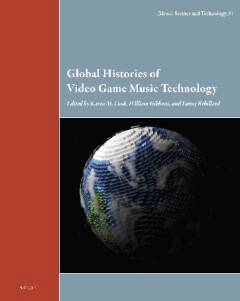
Global Histories of Video Game Music Technology
Karen M. Cook
127,20 €
+ 254 points
Description
This book investigates the global histories of video game sound from the perspective of technology. Technology and video game sound are inextricably intertwined, whether through the creation of the actual sounds, their sonic enactment through the games and consoles, or through their reception and performance outside of the games themselves. Technology and game sound have been the focus of several studies, but those studies have generally maintained a Euro-American and Japanese bias. This volume seeks to begin broadening our perspective by opening up the conversation to and with game sound scholars, practitioners, and specialists from around the world. The contributions in this volume thus speak not only to the most commonly told American, UK, and Japanese histories, but also past and present practices in Spain, France, Germany, Latin America, and Africa. The volume is divided into three sections. The first focuses on the relationships between technology and the development of game sound, from early pinball sounds (Neil Lerner) to the interplay between performance practice, notation, and technology in rhythm games (Alex Habeen Chang). The second part investigates the impact of geographical, economic, and political structures on the development and consumption of game sound. Lasse Lehtonen provides a sweeping historiography of Japanese writing on video game technology and sound, while other chapters scrutinize Spanish game development in the 1980s (Juan Pablo Fernandez-Cortes) and evaluate the use of motion capture in Red Dead Redemption 2 (Barnabas Smith). The final part offers a glimpse into the working lives of industry personnel (developer Eyram Tawia, composers Chase Bethea, Kinuyo Yamashita, and Yann van der Cruyssen (aka Morusque), and translator Jeremie Kermarrec), allowing them to speak to how technology couples with geopolitical factors to impact their experiences working in and with game sound.
Spécifications
Parties prenantes
- Auteur(s) :
- Editeur:
Contenu
- Nombre de pages :
- 313
- Langue:
- Anglais
- Collection :
- Tome:
- n° 8
Caractéristiques
- EAN:
- 9782503618654
- Date de parution :
- 11-09-25
- Format:
- Livre relié
- Format numérique:
- Genaaid
- Poids :
- 1297 g


Seulement chez Librairie Club
+ 254 points sur votre carte client de Librairie Club
Cadeau


Les avis
Nous publions uniquement les avis qui respectent les conditions requises. Consultez nos conditions pour les avis.