


- Retrait en 2 heures
- Assortiment impressionnant
- Paiement sécurisé
- Toujours un magasin près de chez vous
- Retrait en 2 heures
- Assortiment impressionnant
- Paiement sécurisé
- Toujours un magasin près de chez vous



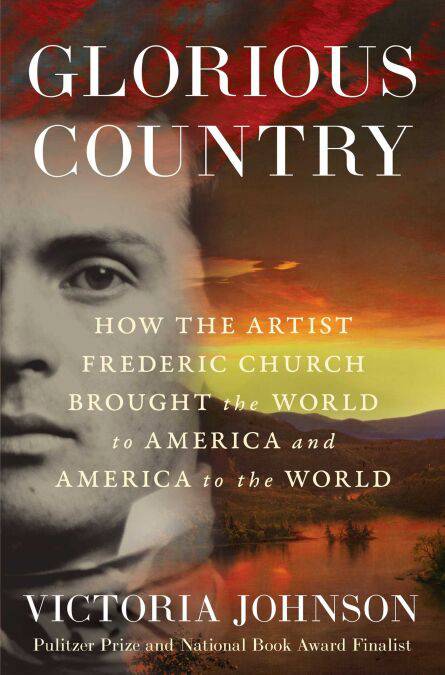
Glorious Country EBOOK
How the Artist Frederic Church Brought the World to America and America to the World
Victoria Johnson
Ebook | Anglais
19,00 €
+ 19 points
Format
Description
From the author of American Eden—finalist for the Pulitzer Prize, the National Book Award, and more—comes a sweeping, richly researched biography of Frederic Church, the great 19th-century American artist whose stunning paintings of remote lands and seas thrilled American audiences and put the young republic on the map of world culture—published on Church’s bicentennial.
“They came to see the world.”
New York, spring 1859. Outside Frederic Church’s Tenth Street studio, men and women amassed by the thousands hoping for a glimpse of his magnificent Heart of the Andes: a painting whose sublime, ‘near supernatural’ rendering of the vast Andean landscape encountered on the artist’s recent travels introduced thousands of Americans to the fierce, majestic beauty of the far-flung wildernesses of the globe.
Frederic Church brought the world to America, and America into the world. Cementing the United States as a cultural and artistic force a full century before America’s Abstract Impressionists rose to prominence, Church’s bold paintings composed odes in color, shadow, and light to natural places near and far: the lush jungles of South America and immense icebergs of Newfoundland where he journeyed as a young man; the Syrian deserts and ancient, ruined cities where he and his wife traveled following the devastating loss of their two young children; the verdant, luminous valley around the Hudson where Church first studied painting and where he returned and established his estate, Olana, whose landscape itself became a work of art. Deeply influenced by the work of Alexander von Humboldt, Church conjured a vision of the natural world as a place of communion with creation.
Church charted, across the latter half of the 19th century, a career that both inhabited and gave shape to the artistic, cultural, and political crosscurrents of his day. Through a close examination of Church's letters, sketches, paintings, and diaries, and traveling in Church's footsteps to Egypt, the Andes, Petra, Jamaica, and Jerusalem, Johnson traces the path not only of one man’s life, but of a country swept up in an era of vast and vertiginous change. Church worked and lived in New York in the city’s formative years. He was a founder of its first great museum, the Met, and in paintings, not in words, he conveyed his passion for the exquisite natural beauty of the United States, but also for a Union free of slavery. He gave Americans visions of the majesty of their own new country and of the wonders of worlds only to be seen in paintings by this astonishing adventurer and artist. Church was a master artist and innovator, turning landscape painting into a portrait of a nation, and in the process, putting American art on the map of the world. Glorious Country is a book, Johnson writes, “about how we see and what we save.”
“They came to see the world.”
New York, spring 1859. Outside Frederic Church’s Tenth Street studio, men and women amassed by the thousands hoping for a glimpse of his magnificent Heart of the Andes: a painting whose sublime, ‘near supernatural’ rendering of the vast Andean landscape encountered on the artist’s recent travels introduced thousands of Americans to the fierce, majestic beauty of the far-flung wildernesses of the globe.
Frederic Church brought the world to America, and America into the world. Cementing the United States as a cultural and artistic force a full century before America’s Abstract Impressionists rose to prominence, Church’s bold paintings composed odes in color, shadow, and light to natural places near and far: the lush jungles of South America and immense icebergs of Newfoundland where he journeyed as a young man; the Syrian deserts and ancient, ruined cities where he and his wife traveled following the devastating loss of their two young children; the verdant, luminous valley around the Hudson where Church first studied painting and where he returned and established his estate, Olana, whose landscape itself became a work of art. Deeply influenced by the work of Alexander von Humboldt, Church conjured a vision of the natural world as a place of communion with creation.
Church charted, across the latter half of the 19th century, a career that both inhabited and gave shape to the artistic, cultural, and political crosscurrents of his day. Through a close examination of Church's letters, sketches, paintings, and diaries, and traveling in Church's footsteps to Egypt, the Andes, Petra, Jamaica, and Jerusalem, Johnson traces the path not only of one man’s life, but of a country swept up in an era of vast and vertiginous change. Church worked and lived in New York in the city’s formative years. He was a founder of its first great museum, the Met, and in paintings, not in words, he conveyed his passion for the exquisite natural beauty of the United States, but also for a Union free of slavery. He gave Americans visions of the majesty of their own new country and of the wonders of worlds only to be seen in paintings by this astonishing adventurer and artist. Church was a master artist and innovator, turning landscape painting into a portrait of a nation, and in the process, putting American art on the map of the world. Glorious Country is a book, Johnson writes, “about how we see and what we save.”
Spécifications
Parties prenantes
- Auteur(s) :
- Editeur:
Contenu
- Nombre de pages :
- 448
- Langue:
- Anglais
Caractéristiques
- EAN:
- 9781982196318
- Date de parution :
- 04-05-26
- Format:
- Ebook
- Protection digitale:
- Adobe DRM
- Format numérique:
- ePub


Seulement chez Librairie Club
+ 19 points sur votre carte client de Librairie Club
Cadeau


Les avis
Nous publions uniquement les avis qui respectent les conditions requises. Consultez nos conditions pour les avis.