


- Retrait en 2 heures
- Assortiment impressionnant
- Paiement sécurisé
- Toujours un magasin près de chez vous
- Retrait en 2 heures
- Assortiment impressionnant
- Paiement sécurisé
- Toujours un magasin près de chez vous



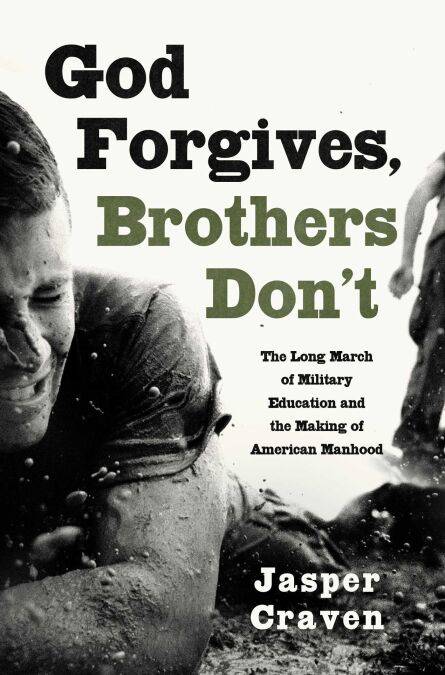
God Forgives, Brothers Don't EBOOK
The Long March of Military Education and the Making of American Manhood
Jasper Craven
Ebook | Anglais
16,76 €
+ 16 points
Format
Description
In the tradition of Sebastian Junger’s Tribe and Chris Hedges’s classic War Is a Force that Gives Us Meaning, a powerful investigation into the fraught history and ominous future of military education in the United States, and how it formed and fuels increasingly volatile strains of American masculinity.
“Send us your boy and we will return to you a man.”
Since the dawn of America, the military has articulated some version of this pledge, solidly staking its claim on the monumental work of building the American man.
When investigative reporter Jasper Craven first dug into Valley Forge Military Academy five years ago, he uncovered an acrid strain of masculinity that was raw, violent, fiercely hierarchical, and quickly mutating out of control. Initially, he had assumed that military education was a dying, outmoded brand. But as he looked deeper, he found a sprawling, well-funded network featuring dozens of military schools, like Valley Forge and West Point, plus thousands of ROTC programs in public colleges and high schools that allowed the Pentagon to wield outsized power on education.
In an unflinching narrative, Craven explores how the military has come to define American masculinity and how it often fosters its most toxic traits. Beginning with the American Revolution, Craven shows how the birth of our nation required a new masculine ideal, crafted in the image of George Washington. During the brutality of the Civil War, Craven traces the parallel violence in military hazing culture and the deeply prejudicial culture at places like West Point, which reared Jefferson Davis, Robert E. Lee, and other famed Confederates.
The first and second World Wars escalated the need for battle-ready youth, and briefly resulted in a relatively noble male archetype, while the Cold War precipitated backlash, resentment, and trauma. This era also marked the beginning of the Christian right’s growing interest in military schools as upholding a patriarchal and fatalistic version of manhood. Vietnam and the antiwar movement fueled the rise of the “troubled teen” and the lying, lawless “operator,” embodied by graduates such as William Westmoreland and Oliver North.
As he chronicles the forever wars, Craven brings us up to today, where the military has further burrowed into civilian education. Meanwhile, policies like “don’t ask, don’t tell” and a campaign of Islamophobia, misogyny, and homophobia have crafted a new manhood that is defined by its ability to both diminish and dehumanize “the other” while also being self-destructive. Its exemplars include such military school graduates as Donald Trump and Pete Hegseth.
Part sweeping military history, part gripping journalistic investigation, God Forgives, Brothers Don’t lifts the veil on the harmful world of military schools and provides essential context and nuance to the ongoing debate on American masculinity.
“Send us your boy and we will return to you a man.”
Since the dawn of America, the military has articulated some version of this pledge, solidly staking its claim on the monumental work of building the American man.
When investigative reporter Jasper Craven first dug into Valley Forge Military Academy five years ago, he uncovered an acrid strain of masculinity that was raw, violent, fiercely hierarchical, and quickly mutating out of control. Initially, he had assumed that military education was a dying, outmoded brand. But as he looked deeper, he found a sprawling, well-funded network featuring dozens of military schools, like Valley Forge and West Point, plus thousands of ROTC programs in public colleges and high schools that allowed the Pentagon to wield outsized power on education.
In an unflinching narrative, Craven explores how the military has come to define American masculinity and how it often fosters its most toxic traits. Beginning with the American Revolution, Craven shows how the birth of our nation required a new masculine ideal, crafted in the image of George Washington. During the brutality of the Civil War, Craven traces the parallel violence in military hazing culture and the deeply prejudicial culture at places like West Point, which reared Jefferson Davis, Robert E. Lee, and other famed Confederates.
The first and second World Wars escalated the need for battle-ready youth, and briefly resulted in a relatively noble male archetype, while the Cold War precipitated backlash, resentment, and trauma. This era also marked the beginning of the Christian right’s growing interest in military schools as upholding a patriarchal and fatalistic version of manhood. Vietnam and the antiwar movement fueled the rise of the “troubled teen” and the lying, lawless “operator,” embodied by graduates such as William Westmoreland and Oliver North.
As he chronicles the forever wars, Craven brings us up to today, where the military has further burrowed into civilian education. Meanwhile, policies like “don’t ask, don’t tell” and a campaign of Islamophobia, misogyny, and homophobia have crafted a new manhood that is defined by its ability to both diminish and dehumanize “the other” while also being self-destructive. Its exemplars include such military school graduates as Donald Trump and Pete Hegseth.
Part sweeping military history, part gripping journalistic investigation, God Forgives, Brothers Don’t lifts the veil on the harmful world of military schools and provides essential context and nuance to the ongoing debate on American masculinity.
Spécifications
Parties prenantes
- Auteur(s) :
- Editeur:
Contenu
- Nombre de pages :
- 352
- Langue:
- Anglais
Caractéristiques
- EAN:
- 9781668087213
- Date de parution :
- 18-05-26
- Format:
- Ebook
- Protection digitale:
- Adobe DRM
- Format numérique:
- ePub


Seulement chez Librairie Club
+ 16 points sur votre carte client de Librairie Club
Cadeau


Les avis
Nous publions uniquement les avis qui respectent les conditions requises. Consultez nos conditions pour les avis.