


- Retrait en 2 heures
- Assortiment impressionnant
- Paiement sécurisé
- Toujours un magasin près de chez vous
- Retrait en 2 heures
- Assortiment impressionnant
- Paiement sécurisé
- Toujours un magasin près de chez vous



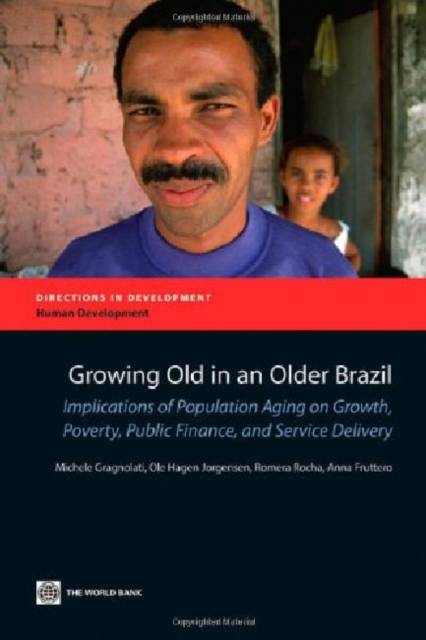
Growing Old in an Older Brazil
Implications of Population Aging on Growth, Poverty, Public Finance and Service Delivery
Michele Gragnolati, Ole Hagen Jorgensen, Romero Rocha
59,45 €
+ 118 points
Description
Brazil is in the middle of a profound socioeconomic transformation driven by demographic change. Because of profound changes in mortality and, especially, fertility over the past four decades the population at older ages then begun to increase, a trend that will become more and more rapid as time progresses. While it took more than a century for France's population, aged 65 and above, to increase from 7 to 14 percent of the total population, the same demographic change will occur in the next two decades in Brazil (between 2011 and 2031). The elderly population will more than triple within the next four decades, from less than 20 million in 2010 to approximately 65 million in 2050. On the one side, these shifts in population age structure will lead to substantial additional fiscal pressures on publicly financed health care and pensions, along with substantial reductions in fiscal pressures for publicly financed education. Public transfers in Brazil have been very effective in reducing poverty among the elderly in both urban and rural areas. However, without substantial changes, the aging of the population will put a strain on the current system that will result in some critical trade-offs with consequence for poverty among other vulnerable groups and for the growth prospects of the country. One the other side, given the strong association between people's economic behavior and the life cycle, changes in the population age structure have a major impact on economic development. This book investigates the impact of demographic changes on several dimensions of the Brazilian economy and society. It does so in a comprehensive and systematic way that captures the broad complexity of issues, from economic growth to poverty, from public financing of social services and transfers to savings, from employment to health and long-term care, and their interrelations.
Spécifications
Parties prenantes
- Auteur(s) :
- Editeur:
Contenu
- Nombre de pages :
- 304
- Langue:
- Anglais
- Collection :
Caractéristiques
- EAN:
- 9780821388020
- Date de parution :
- 14-09-11
- Format:
- Livre broché
- Format numérique:
- Trade paperback (VS)
- Dimensions :
- 152 mm x 229 mm
- Poids :
- 449 g


Seulement chez Librairie Club
+ 118 points sur votre carte client de Librairie Club
Cadeau


Les avis
Nous publions uniquement les avis qui respectent les conditions requises. Consultez nos conditions pour les avis.