


- Retrait en 2 heures
- Assortiment impressionnant
- Paiement sécurisé
- Toujours un magasin près de chez vous
- Retrait en 2 heures
- Assortiment impressionnant
- Paiement sécurisé
- Toujours un magasin près de chez vous



366,45 €
+ 732 points
Description
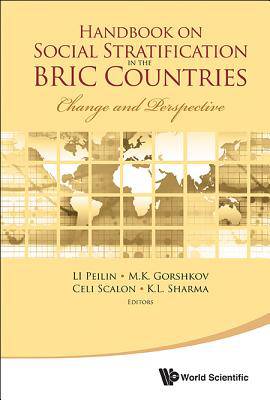
Along with the fast growing economy, the term "BRICs" was coined to represent the newly emerging countries -- Brazil, Russia, India and China. The enhanced economy in these countries has largely improved people's life; at the same time, it has also strongly influenced the transformation of social structure, norms and values. However, as the world's attention centers on their economic development at the micro level, the social changes at the micro level have often been neglected, and a specific comparative study of these four countries is even more rare.This handbook's contributing authors are leading sociologists in the four countries. They fill the gap in existing literature and examine specifically the changes in each society from the perspective of social stratification, with topics covering the main social classes, the inequality of education and income, and the different styles of consumption as well as the class consciousness and values. Under every topic, it gathers articles from authors of each country. Such a comparative study could not only help us achieve a better understanding of the economic growth and social development in these countries, but also lead us to unveil the mystery of how these emerging powers with dramatic differences in history, geography, culture, language, religion and politics could share a common will and take joint action. In general, the handbook takes a unique perspective to show readers that it is the profound social structural changes in these countries that determine their future, and to a large extent, will shape the socio-economic landscape of the future world.
Spécifications
Parties prenantes
- Auteur(s) :
- Editeur:
Contenu
- Nombre de pages :
- 856
- Langue:
- Anglais
Caractéristiques
- EAN:
- 9789814390415
- Date de parution :
- 06-04-13
- Format:
- Livre relié
- Format numérique:
- Genaaid
- Dimensions :
- 155 mm x 231 mm
- Poids :
- 1315 g


Seulement chez Librairie Club
+ 732 points sur votre carte client de Librairie Club
Cadeau


Les avis
Nous publions uniquement les avis qui respectent les conditions requises. Consultez nos conditions pour les avis.