


- Retrait en 2 heures
- Assortiment impressionnant
- Paiement sécurisé
- Toujours un magasin près de chez vous
- Retrait en 2 heures
- Assortiment impressionnant
- Paiement sécurisé
- Toujours un magasin près de chez vous



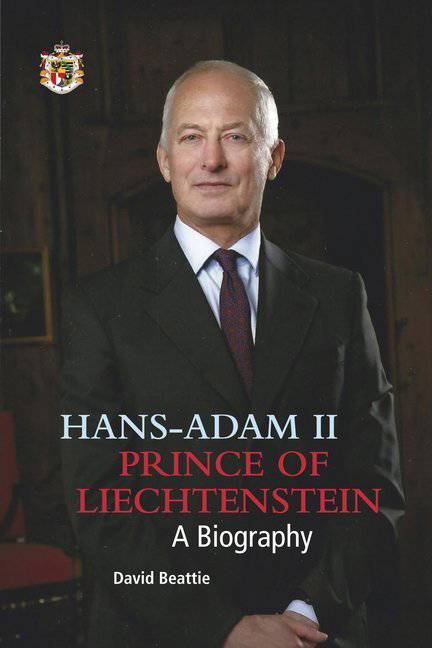
Hans-Adam II Prince of Liechtenstein - a biography
With an overview of the history of the House of Liechtenstein
David Beattie
Livre relié | Anglais
45,45 €
+ 90 points
Description
Monarch, businessman, banker, art collector, visionary and outspoken controversialist: Prince Hans-Adam II of Liechtenstein is all of these. As he turns 75, and as the Principality which bears his family name celebrates its 300th anniversary, Hans-Adam II can enjoy a record of unusual success and look forward to the future with undiminished energy.Despite his background, his successes did not come easily. For centuries the Liechtenstein family was at the heart of the Habsburg Monarchy's affairs, producing soldiers, statesmen and diplomats. It amassed a fortune which enabled it to build Europe's most important private art collection, to promote agriculture and the sciences and to develop large-scale welfare and charitable activities. By 1945 the family had lost almost all the sources of its income. The continuing existence of the Principality had been assured, but the family still had to bear the costs of the monarchy in Liechtenstein and the upkeep of the art collection and two dilapidated palaces in Vienna. By 1970 the family was almost bankrupt.Hans-Adam II's business and banking acumen has enabled him to restore the family finances to the point where the palaces in Vienna have been sumptuously restored as homes for the Liechtenstein Collections. Works of art are now once more being bought instead of sold. Against some strong domestic opposition Hans-Adam II pressed successfully for Liechtenstein to assert its sovereignty and independence by joining the United Nations Organisation and the European Economic Area. He gained popular agreement to controversial constitutional changes which redefined and clarified the respective roles of the Liechtenstein monarchy, parliament, judiciary and people.Hans-Adam II is a passionate advocate of self-determination, in support of which he has spoken at the UN General Assembly and founded an institute at Princeton University. From personal experience he believes strongly in the advantages of small states. He hopes that the state of the future will be a service organisation that works for the benefit of its people, rather than the reverse.Hans-Adam II cheerfully admits that diplomacy was never one of his strengths. This book makes use of his own words in telling his story.
Spécifications
Parties prenantes
- Auteur(s) :
- Editeur:
Contenu
- Langue:
- Anglais
Caractéristiques
- EAN:
- 9783905881639
- Format:
- Livre relié
- Dimensions :
- 171 mm x 241 mm
- Poids :
- 710 g


Seulement chez Librairie Club
+ 90 points sur votre carte client de Librairie Club
Cadeau


Les avis
Nous publions uniquement les avis qui respectent les conditions requises. Consultez nos conditions pour les avis.