


En raison d'une grève chez bpost, des retards de livraison peuvent survenir. Besoin de quelque chose en urgence ? Optez pour un retrait en magasin ou rendez-vous dans une Librairie Club à proximité.
- Retrait en 2 heures
- Assortiment impressionnant
- Paiement sécurisé
- Toujours un magasin près de chez vous
En raison d'une grève chez bpost, des retards de livraison peuvent survenir. Besoin de quelque chose en urgence ? Optez pour un retrait en magasin ou rendez-vous dans une Librairie Club à proximité.
- Retrait en 2 heures
- Assortiment impressionnant
- Paiement sécurisé
- Toujours un magasin près de chez vous


Description
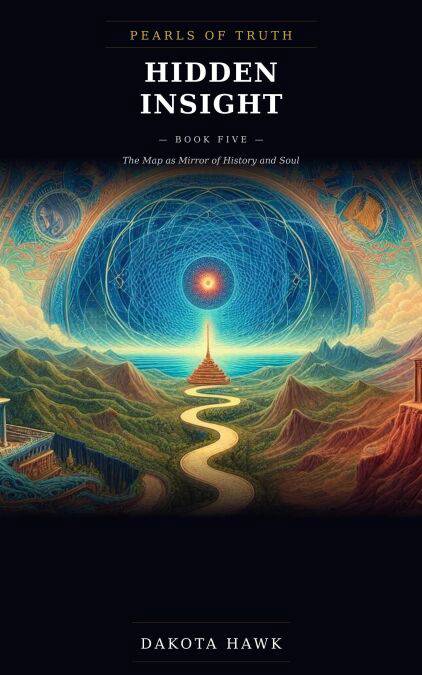
In 1945, in the Egyptian desert near Nag Hammadi, a farmer struck a sealed clay jar. Out spilled codices buried for sixteen centuries—texts the institutional church tried to destroy, preserved by monks who couldn't burn them. What fascinates isn't the Gnostic texts themselves—many contain errors this series identifies. It's the method of reading them.
The ancient cosmologies aren't describing supernatural beings in distant heavens. They're mapping dimensions of consciousness. Mind. Word. Life. Wisdom. Truth. Faith. Each "aeon" corresponds to a faculty of awareness. The myths of Sophia—her longing, fragmentation, restoration—describe the psychological drama every soul undergoes.
Hidden Insight reveals that what is discovered externally corresponds to what awakens internally.
What You'll Discover:
The Nag Hammadi library and its significance for understanding early Christianity before institutional consolidation. Why certain texts were buried and others canonized—and what the selection reveals about power rather than truth. The monks who preserved these writings sensed their value even when bishops demanded their destruction.
The ancient framework that maps consciousness itself. How the aeons function as faculties of awareness, how Sophia's fall mirrors our own fragmentation, and how Logos provides the pattern for restoration. This is psychology before psychology had a name—a map of the soul encoded in mythological language that modern depth psychology is only beginning to rediscover.
The hidden teaching encoded in contemporary culture. Films, television, music, literature, and games that rehearse Gnostic patterns—sometimes consciously, often unconsciously. Hollywood keeps returning to these themes because they describe something real about human experience. The same stories once told in Alexandria now play on screens worldwide.
The integration of ancient wisdom with biblical revelation. These texts don't replace Scripture—they illuminate dimensions that institutional interpretation obscured. The seamless garment begins to reweave when we stop treating these traditions as enemies.
A Bridge, Not a Destination:
This book doesn't make you a Gnostic. It gives you conceptual tools to understand a suppressed dimension of early Christian thought and recognize its patterns in your own consciousness. The map describes the territory of your own soul. What the ancients called awakening, modern psychology calls individuation.
For readers who've journeyed through Books One through Four, this volume opens a door that institutional Christianity locked centuries ago. For newcomers, it offers a window into the interior tradition that complements the covenant framework.
The buried light is ready to emerge.
The Pattern in Plain Sight:
Once you understand the framework, you'll recognize it everywhere. The Matrix trilogy. The Truman Show. Westworld. Inception. These aren't just entertainment—they're rehearsals of the ancient pattern. The protagonist awakens from false reality, discovers hidden controllers, and fights for liberation. The Gnostic myth wears modern clothing.
This volume traces these patterns through cinema, television, music, literature, and interactive media. The ancients articulated in mythic form what we now express in psychological language. The stories resonate because they describe something genuinely true about our condition.
The Interior Inheritance:
What was lost can be recovered. What was buried is rising. The interior dimension of early Christianity—suppressed and nearly erased—awaits recognition. Not as replacement for Scripture, but as complement. The seamless garment of Faith, Wisdom, and Truth begins to reweave itself in those willing to receive all three.
Book Five in the Pearls of Truth series by Dakota Hawk.
Spécifications
Parties prenantes
- Auteur(s) :
- Editeur:
Contenu
- Langue:
- Anglais
- Collection :
Caractéristiques
- EAN:
- 9798233765520
- Date de parution :
- 02-01-26
- Format:
- Ebook
- Protection digitale:
- /
- Format numérique:
- ePub


Seulement chez Librairie Club
Cadeau


Les avis
Nous publions uniquement les avis qui respectent les conditions requises. Consultez nos conditions pour les avis.