


- Retrait en 2 heures
- Assortiment impressionnant
- Paiement sécurisé
- Toujours un magasin près de chez vous
- Retrait en 2 heures
- Assortiment impressionnant
- Paiement sécurisé
- Toujours un magasin près de chez vous



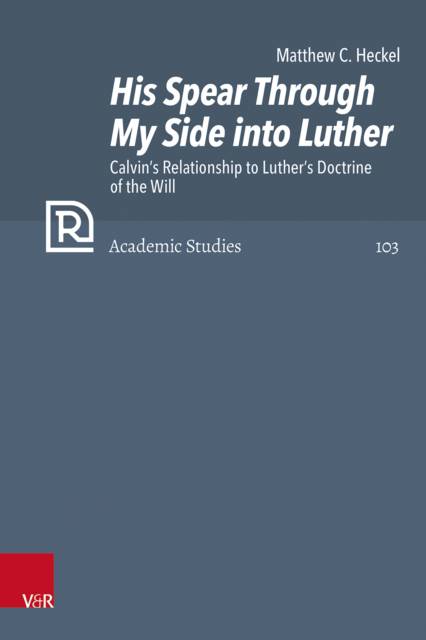
His Spear Through My Side Into Luther
Calvin's Relationship to Luther's Doctrine of the Will
Matthew C Heckel
128,45 €
+ 256 points
Description
In the Bondage and Liberation of the Will, Calvin claimed full agreement with Luther's doctrine of the unfree will and divine necessity. Some scholars argue however that Calvin was trying to create the appearance of unity and was embarrassed by Luther's teaching. They have also denied any substantial influence from Luther. Others argue that the Reformers discontinued their teaching on necessity in the face of criticism. Matthew Heckel defends Calvin's claim to unity with Luther and that Luther had a formative influence on Calvin. The latter can be seen in the fact that Calvin followed uniquely Lutheran contributions like the denial of free choice as a misleading term, free choice only in what is under human dominion, contingency defined as chance, divine omnipotence as the actuating force of divine necessity, and the distinctions between the hidden and revealed God and law and gospel. Despite what some interpreters have said, both Reformers affirmed necessity because of sin and divine sovereignty throughout their careers. Though the Reformers believed in divine necessity, they were careful to say that God was not the author of sin either before or after the fall of humankind. While Luther and Calvin agreed on necessity imposed by sin and divine sovereignty, they affirmed that the human will is always voluntary and thus responsible for its actions. Concerning predestination, they taught its double nature respecting the elect and the reprobate, while consoling believers by pointing them to grace alone in Christ-the revealed God-and God's preservation of the elect. Differences between the Reformers are noted but true solidarity existed on the will.
Spécifications
Parties prenantes
- Auteur(s) :
- Editeur:
Contenu
- Nombre de pages :
- 333
- Langue:
- Anglais
- Collection :
- Tome:
- n° 103
Caractéristiques
- EAN:
- 9783525501061
- Date de parution :
- 09-12-2024
- Format:
- Livre relié
- Format numérique:
- Genaaid
- Dimensions :
- 154 mm x 230 mm
- Poids :
- 5996 g



Seulement chez Librairie Club
+ 256 points sur votre carte client de Librairie Club
Cadeau


Les avis
Nous publions uniquement les avis qui respectent les conditions requises. Consultez nos conditions pour les avis.