


En raison d'une grève chez bpost, des retards de livraison peuvent survenir. Besoin de quelque chose en urgence ? Optez pour un retrait en magasin ou rendez-vous dans une Librairie Club à proximité.
- Retrait en 2 heures
- Assortiment impressionnant
- Paiement sécurisé
- Toujours un magasin près de chez vous
En raison d'une grève chez bpost, des retards de livraison peuvent survenir. Besoin de quelque chose en urgence ? Optez pour un retrait en magasin ou rendez-vous dans une Librairie Club à proximité.
- Retrait en 2 heures
- Assortiment impressionnant
- Paiement sécurisé
- Toujours un magasin près de chez vous


19,99 €
+ 19 points
Description
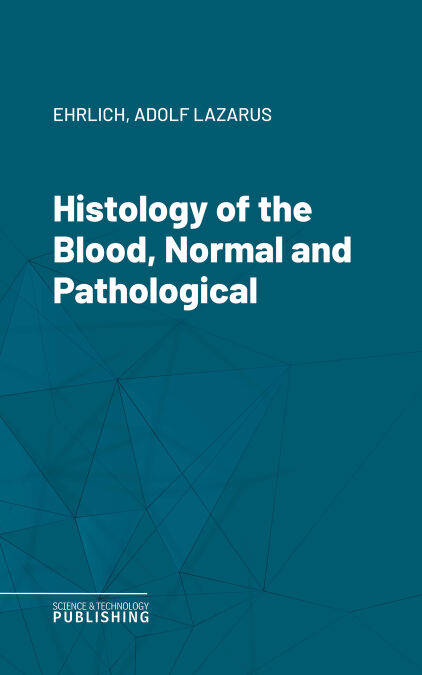
Histology of the Blood, Normal and Pathological by Paul Ehrlich and Adolf Lazarus is a seminal work that explores the microscopic structure and function of blood in both healthy and diseased states. This comprehensive volume, translated by W. Myers, delves into the intricate details of blood histology, offering a thorough examination of the cellular components, including red and white blood cells, platelets, and plasma. The authors meticulously describe the morphology, staining reactions, and physiological roles of each blood element, providing clear illustrations and detailed explanations to enhance understanding. The book is divided into sections that cover the normal histology of blood, the development and differentiation of blood cells, and the pathological changes observed in various blood disorders. It discusses the methods of blood examination, including the preparation and staining of blood films, and the interpretation of findings under the microscope. Special attention is given to the identification and classification of abnormal cells, such as those seen in anemia, leukemia, and other hematological diseases. Ehrlich and Lazarus also explore the significance of blood histology in clinical diagnosis, emphasizing the importance of recognizing subtle changes in cell morphology that may indicate underlying pathology. The text is enriched with historical context, reflecting the state of scientific knowledge at the time and the pioneering contributions of the authors to the field of hematology. Histology of the Blood, Normal and Pathological remains a valuable resource for students, researchers, and clinicians interested in the microscopic study of blood. Its detailed descriptions, scientific rigor, and practical guidance make it an essential reference for understanding the complexities of blood in health and disease.
Spécifications
Parties prenantes
- Auteur(s) :
- Editeur:
Contenu
- Langue:
- Anglais
Caractéristiques
- EAN:
- 9782528105900
- Date de parution :
- 31-08-25
- Format:
- Ebook
- Protection digitale:
- /
- Format numérique:
- ePub


Seulement chez Librairie Club
+ 19 points sur votre carte client de Librairie Club
Cadeau

Cadeau


Les avis
Nous publions uniquement les avis qui respectent les conditions requises. Consultez nos conditions pour les avis.