


- Retrait en 2 heures
- Assortiment impressionnant
- Paiement sécurisé
- Toujours un magasin près de chez vous
- Retrait en 2 heures
- Assortiment impressionnant
- Paiement sécurisé
- Toujours un magasin près de chez vous



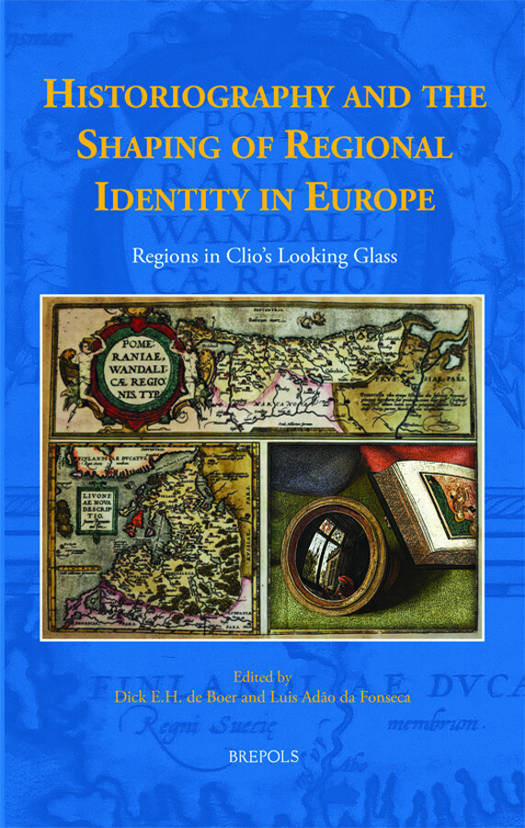
Historiography and the Shaping of Regional Identity in Europe
Regions in Clio's Looking Glass
Dick E. H. de Boer
95,40 €
+ 190 points
Description
This volume describes real and mental regions as the historical undertone that destined a changing Europe during the last millennium. Over the centuries, historiography - in many different forms - became an important vehicle by which to create, articulate, and express the existence, awareness, and characteristics of Europe's regions. Be it the histories of noble families that were important stakeholders in a region, urban histories describing the developing urban networks through which regions could function, dynastic histories emphasizing the relationship between ruler and region, or hagiographies describing holy men and women and their veneration as focal points within regions - all of them represented and reflected identities within an understood spatial and or mental sphere. Historiography can therefore help us to understand the way in which regions were seen from within and from without, and to understand the patterns and dynamics of regional cohesion. Moreover, it sheds light on the dialectic between nation and region, and on the relationship between the regional sphere and the wider (inter)national sphere. The authors of this volume look at individual European regions from different points of view, using historiography as a lens. They analyse the ways in which history as a construct has played a role in establishing regional identity, providing examples of the ways in which recording, interpreting, and recounting the history of regions through the ages has been instrumental in shaping these regions. The first section of the volume explores regional identity in medieval and early modern historiography; the second shows how, in the age of the invention and triumph of the European nation-state (the long nineteenth century), historiography of a new kind was applied for a deliberate creation of regional identity, or at least reflected the need for a historical confirmation of identities.
Spécifications
Parties prenantes
- Auteur(s) :
- Editeur:
Contenu
- Nombre de pages :
- 301
- Langue:
- Anglais
- Collection :
- Tome:
- n° 16
Caractéristiques
- EAN:
- 9782503590714
- Date de parution :
- 10-12-20
- Format:
- Livre relié
- Format numérique:
- Genaaid
- Poids :
- 1115 g


Seulement chez Librairie Club
+ 190 points sur votre carte client de Librairie Club
Cadeau


Les avis
Nous publions uniquement les avis qui respectent les conditions requises. Consultez nos conditions pour les avis.