


En raison d'une grève chez bpost, des retards de livraison peuvent survenir. Besoin de quelque chose en urgence ? Optez pour un retrait en magasin ou rendez-vous dans une Librairie Club à proximité.
- Retrait en 2 heures
- Assortiment impressionnant
- Paiement sécurisé
- Toujours un magasin près de chez vous
En raison d'une grève chez bpost, des retards de livraison peuvent survenir. Besoin de quelque chose en urgence ? Optez pour un retrait en magasin ou rendez-vous dans une Librairie Club à proximité.
- Retrait en 2 heures
- Assortiment impressionnant
- Paiement sécurisé
- Toujours un magasin près de chez vous



4,49 €
+ 4 points
Description
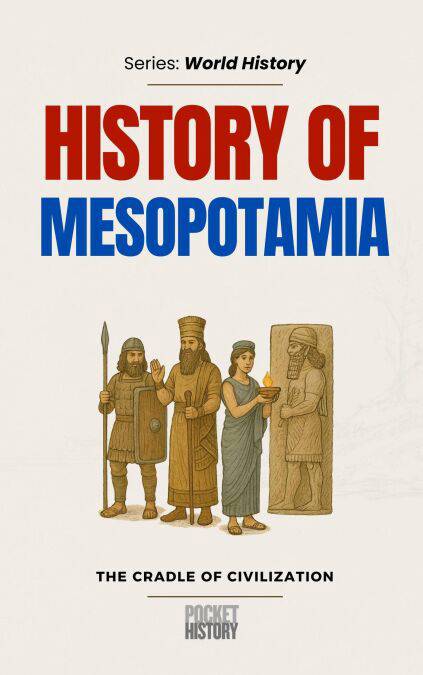
The History of Mesopotamia tells the story of the land between the Tigris and Euphrates, where some of humanity's first cities rose from the fertile plains and laid the foundations of civilization. Often called the cradle of civilization, Mesopotamia witnessed the birth of writing, law, urban planning, organized religion, and imperial power.
This book traces the development of the Sumerian city-states, the rise of the Akkadian Empire under Sargon, and the grandeur of Babylon under Hammurabi, whose legal code became one of the earliest known systems of written law. It explores the military strength and administrative sophistication of Assyria, the cultural revival of the Neo-Babylonian Empire, and the enduring myths preserved in the Epic of Gilgamesh.
Beyond kings and conquests, this narrative examines daily life, religious beliefs, technological innovations, and the social structures that shaped early urban societies. Readers will discover how cuneiform writing transformed communication, how ziggurats symbolized the connection between heaven and earth, and how the political struggles of the Bronze Age influenced the broader Ancient Near East.
Written in a clear and engaging style, this book offers a comprehensive yet accessible introduction to one of the most influential civilizations in world history, revealing how Mesopotamia's legacy continues to shape law, governance, literature, and culture today.
Spécifications
Parties prenantes
- Auteur(s) :
- Editeur:
Contenu
- Langue:
- Anglais
- Collection :
Caractéristiques
- EAN:
- 9798232235437
- Date de parution :
- 25-02-26
- Format:
- Ebook
- Protection digitale:
- /
- Format numérique:
- ePub


Seulement chez Librairie Club
+ 4 points sur votre carte client de Librairie Club
Cadeau

Cadeau


Les avis
Nous publions uniquement les avis qui respectent les conditions requises. Consultez nos conditions pour les avis.