


- Retrait en 2 heures
- Assortiment impressionnant
- Paiement sécurisé
- Toujours un magasin près de chez vous
- Retrait en 2 heures
- Assortiment impressionnant
- Paiement sécurisé
- Toujours un magasin près de chez vous



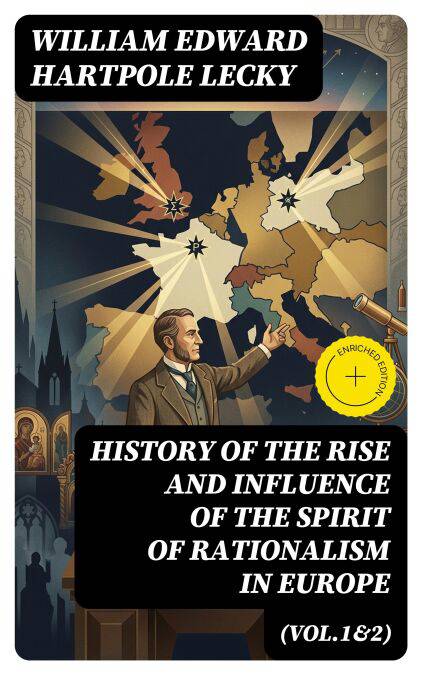
History of the Rise and Influence of the Spirit of Rationalism in Europe (Vol.1&2) EBOOK
Enriched edition.
William Edward Hartpole Lecky
Ebook | Anglais
0,49 €
0,99 €
Format
Description
In "History of the Rise and Influence of the Spirit of Rationalism in Europe," William Edward Hartpole Lecky meticulously examines the intellectual evolution that led to the emergence of rationalist thought across Europe. Lecky employs an analytical narrative style, richly interweaving historical events, philosophical discourse, and cultural shifts, which marks his work within the tradition of 19th-century historiography. The two-volume set traces the influences of Enlightenment thinkers, the Reformation, and scientific advancements, offering insight into how these elements converged to foster a spirit of inquiry and skepticism that would reshape European society. William Edward Hartpole Lecky (1838-1903) was a prominent Irish historian and political theorist known for his commitment to rationalism and liberalism, which are apparent in this work. Influenced by the tumult of his times, including the decline of religious orthodoxy and the rise of secular humanism, Lecky aimed to contextualize rational thought as a transformative force in European history. His extensive education and involvement in political life informed his critical approach towards societal progress rooted in reason. This comprehensive analysis is essential reading for anyone interested in the intellectual history of Europe, as it provides not only a deep dive into the philosophical undercurrents of the era but also a broader understanding of the dynamics between reason and belief. Lecky's eloquent prose and keen insights invite readers to reflect on the enduring legacy of rationalism and its influence on contemporary thought.
In this enriched edition, we have carefully created added value for your reading experience:
- A succinct Introduction situates the work's timeless appeal and themes.
- The Synopsis outlines the central plot, highlighting key developments without spoiling critical twists.
- A detailed Historical Context immerses you in the era's events and influences that shaped the writing.
- A thorough Analysis dissects symbols, motifs, and character arcs to unearth underlying meanings.
- Reflection questions prompt you to engage personally with the work's messages, connecting them to modern life.
- Hand‐picked Memorable Quotes shine a spotlight on moments of literary brilliance.
- Interactive footnotes clarify unusual references, historical allusions, and archaic phrases for an effortless, more informed read.
In this enriched edition, we have carefully created added value for your reading experience:
- A succinct Introduction situates the work's timeless appeal and themes.
- The Synopsis outlines the central plot, highlighting key developments without spoiling critical twists.
- A detailed Historical Context immerses you in the era's events and influences that shaped the writing.
- A thorough Analysis dissects symbols, motifs, and character arcs to unearth underlying meanings.
- Reflection questions prompt you to engage personally with the work's messages, connecting them to modern life.
- Hand‐picked Memorable Quotes shine a spotlight on moments of literary brilliance.
- Interactive footnotes clarify unusual references, historical allusions, and archaic phrases for an effortless, more informed read.
Spécifications
Parties prenantes
- Auteur(s) :
- Editeur:
Contenu
- Nombre de pages :
- 575
- Langue:
- Anglais
Caractéristiques
- EAN:
- 8596547716211
- Date de parution :
- 08-11-23
- Format:
- Ebook
- Protection digitale:
- Digital watermarking
- Format numérique:
- ePub



Seulement chez Librairie Club
Cadeau


Les avis
Nous publions uniquement les avis qui respectent les conditions requises. Consultez nos conditions pour les avis.