


- Retrait en 2 heures
- Assortiment impressionnant
- Paiement sécurisé
- Toujours un magasin près de chez vous
- Retrait en 2 heures
- Assortiment impressionnant
- Paiement sécurisé
- Toujours un magasin près de chez vous



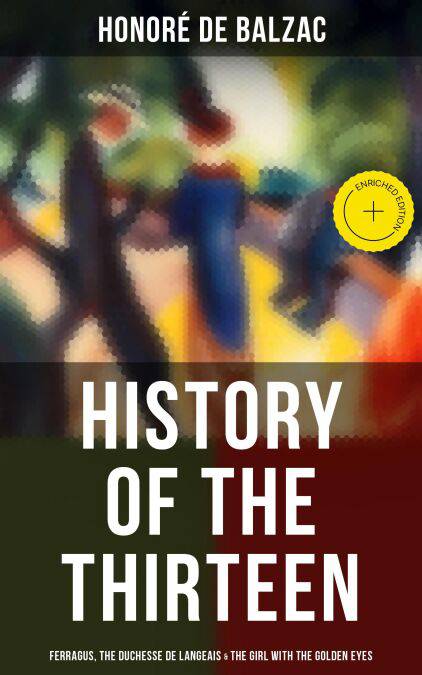
History of the Thirteen: Ferragus, The Duchesse de Langeais & The Girl with the Golden Eyes EBOOK
Enriched edition.
Honoré de Balzac
Ebook | Anglais
1,99 €
+ 1 points
Description
Honore de Balzac's 'History of the Thirteen: Ferragus, The Duchesse de Langeais & The Girl with the Golden Eyes' is a collection of three novellas that delve into themes of power, desire, and manipulation in Parisian society during the early 19th century. Balzac's literary style is characterized by a detailed and realistic portrayal of characters and settings, with a keen attention to psychological depth and social interactions. Each novella in this collection offers a different perspective on the complexities of human relationships and the quest for power and love. Set against the backdrop of post-Revolutionary France, these stories provide a fascinating insight into the underbelly of society. Balzac's nuanced exploration of ambition and betrayal makes these novellas a compelling read for fans of French literature and historical fiction. Known for his extensive body of work known as 'La Comedie Humaine,' Balzac's own experiences as a struggling writer and his observations of Parisian life inspired him to create this intricate and captivating collection of novellas. 'History of the Thirteen' is a must-read for anyone interested in exploring the darker side of human nature and the intricacies of power dynamics.
In this enriched edition, we have carefully created added value for your reading experience:
- A comprehensive Introduction outlines these selected works' unifying features, themes, or stylistic evolutions.
- The Author Biography highlights personal milestones and literary influences that shape the entire body of writing.
- A Historical Context section situates the works in their broader era—social currents, cultural trends, and key events that underpin their creation.
- A concise Synopsis (Selection) offers an accessible overview of the included texts, helping readers navigate plotlines and main ideas without revealing critical twists.
- A unified Analysis examines recurring motifs and stylistic hallmarks across the collection, tying the stories together while spotlighting the different work's strengths.
- Reflection questions inspire deeper contemplation of the author's overarching message, inviting readers to draw connections among different texts and relate them to modern contexts.
- Lastly, our hand‐picked Memorable Quotes distill pivotal lines and turning points, serving as touchstones for the collection's central themes.
In this enriched edition, we have carefully created added value for your reading experience:
- A comprehensive Introduction outlines these selected works' unifying features, themes, or stylistic evolutions.
- The Author Biography highlights personal milestones and literary influences that shape the entire body of writing.
- A Historical Context section situates the works in their broader era—social currents, cultural trends, and key events that underpin their creation.
- A concise Synopsis (Selection) offers an accessible overview of the included texts, helping readers navigate plotlines and main ideas without revealing critical twists.
- A unified Analysis examines recurring motifs and stylistic hallmarks across the collection, tying the stories together while spotlighting the different work's strengths.
- Reflection questions inspire deeper contemplation of the author's overarching message, inviting readers to draw connections among different texts and relate them to modern contexts.
- Lastly, our hand‐picked Memorable Quotes distill pivotal lines and turning points, serving as touchstones for the collection's central themes.
Spécifications
Parties prenantes
- Auteur(s) :
- Traducteur(s):
- Editeur:
Contenu
- Nombre de pages :
- 288
- Langue:
- Anglais
Caractéristiques
- EAN:
- 4057664560797
- Date de parution :
- 17-12-19
- Format:
- Ebook
- Protection digitale:
- Digital watermarking
- Format numérique:
- ePub



Seulement chez Librairie Club
+ 1 points sur votre carte client de Librairie Club
Cadeau


Les avis
Nous publions uniquement les avis qui respectent les conditions requises. Consultez nos conditions pour les avis.