


En raison d'une grève chez bpost, des retards de livraison peuvent survenir. Besoin de quelque chose en urgence ? Optez pour un retrait en magasin ou rendez-vous dans une Librairie Club à proximité.
- Retrait en 2 heures
- Assortiment impressionnant
- Paiement sécurisé
- Toujours un magasin près de chez vous
En raison d'une grève chez bpost, des retards de livraison peuvent survenir. Besoin de quelque chose en urgence ? Optez pour un retrait en magasin ou rendez-vous dans une Librairie Club à proximité.
- Retrait en 2 heures
- Assortiment impressionnant
- Paiement sécurisé
- Toujours un magasin près de chez vous



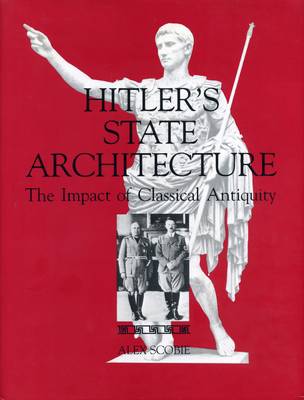
Description
Adolf Hitler admired ancient Rome as the "crystallization point of a world empire," a capital with massive public monuments that reflected the supremacy of the State and the political might of the ancient world's "master-race." He also admired the way Mussolini turned the monuments of imperial Rome into validatory symbols of Fascism. Hitler planned a Reich that would be a as durable as the Roman Empire. Its capital, Berlin, would surpass the architectural magnificence of ancient Rome before the advent of Christianity as its official religion.
This book examines Hitler's views on Roman imperialism, town planning, and architecture, and shows how Albert Speer, though a self-confessed student of "Doric" architecture, planned and sometimes built structures that were intended to rival such monuments as Nero's Golden House, Hadrian's Pantheon, and the Stadium of Herodes Atticus at Athens. Other architects, such as Ludwig Ruff and Cäsar Pinnau, were to plan structures inspired by the Colosseum and the Baths of Caracalla. The ancient Roman obsession with order, discipline, and the domination of the environment is clearly reflected in the town plans and public buildings conceived by Hitler and his architects.
We see that "neoclassical" state architecture in Nazi Germany was intended to signify more than stability and the persistence of tradition. It was only one aspect of the Nazi attempt to re-create a "pagan" totalitarian state based on clearly defined forms of hierarchy that divided society into slaves and slave-owners, those with and those without human rights.
Spécifications
Parties prenantes
- Auteur(s) :
- Editeur:
Contenu
- Nombre de pages :
- 168
- Langue:
- Anglais
- Collection :
- Tome:
- n° 45
Caractéristiques
- EAN:
- 9780271006918
- Date de parution :
- 01-10-90
- Format:
- Livre relié
- Format numérique:
- Genaaid
- Dimensions :
- 224 mm x 289 mm
- Poids :
- 943 g


Seulement chez Librairie Club
Cadeau


Les avis
Nous publions uniquement les avis qui respectent les conditions requises. Consultez nos conditions pour les avis.