


- Retrait en 2 heures
- Assortiment impressionnant
- Paiement sécurisé
- Toujours un magasin près de chez vous
- Retrait gratuit dans votre magasin Club
- 7.000.0000 titres dans notre catalogue
- Payer en toute sécurité
- Toujours un magasin près de chez vous

219,45 €
+ 438 points
Description
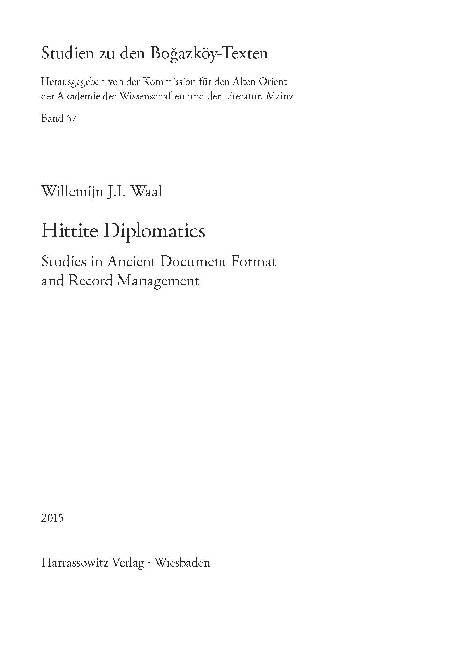
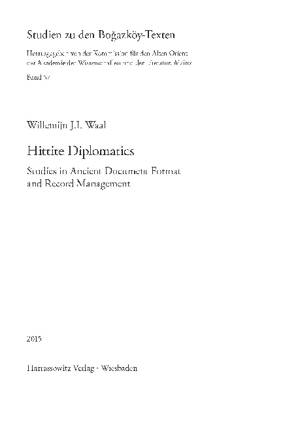
In the Hittite capital ?attusa, some 25,000 tablets and, for the most part, fragments have been discovered in several locations. These tablets all formed part of the state archives of the Hittite Empire (ca. 1650-1180 BCE), and contained texts of various nature (religious, legal, historical, literary, administrative, etc.). Applying the research methods of diplomatics or Urkundenlehre, this study has taken the clay tablet per se as a starting point in order to gain a better understanding of these tablet collections. The first six chapters deal with the extrinsic elements of documentary form, consisting of a diachronic and synchronic analysis of the physical characteristics of the Hittite clay tablet, such as its size, shape and layout. This study makes clear that certain conventions regarding their physical appearance existed, and that they were partly dependent on the text type of the tablet and the time period in which it was written. In the seventh chapter, Hittite terminology for writing materials is discussed. Central to the eighth chapter is an intrinsic element of documentary form, the colophon. As it turns out, the distribution of Hittite colophons is very consistent: some text genres practically always have a colophon whereas it is absent in others. Within the colophons themselves, one can further detect chronological developments. Since no complete edition of the colophons is available, transliterations and translations of this corpus have been included in the appendices. The last chapter of the book aims to reconstruct the record management and organization of the Hittite tablet collections.
Spécifications
Parties prenantes
- Auteur(s) :
- Editeur:
Contenu
- Nombre de pages :
- 620
- Langue:
- Anglais
- Collection :
- Tome:
- n° 57
Caractéristiques
- EAN:
- 9783447104821
- Date de parution :
- 14-12-15
- Format:
- Livre relié
- Format numérique:
- Genaaid
- Dimensions :
- 178 mm x 249 mm
- Poids :
- 1319 g


Seulement chez Librairie Club
+ 438 points sur votre carte client de Librairie Club

Les avis
Nous publions uniquement les avis qui respectent les conditions requises. Consultez nos conditions pour les avis.