


- Retrait en 2 heures
- Assortiment impressionnant
- Paiement sécurisé
- Toujours un magasin près de chez vous
- Retrait en 2 heures
- Assortiment impressionnant
- Paiement sécurisé
- Toujours un magasin près de chez vous



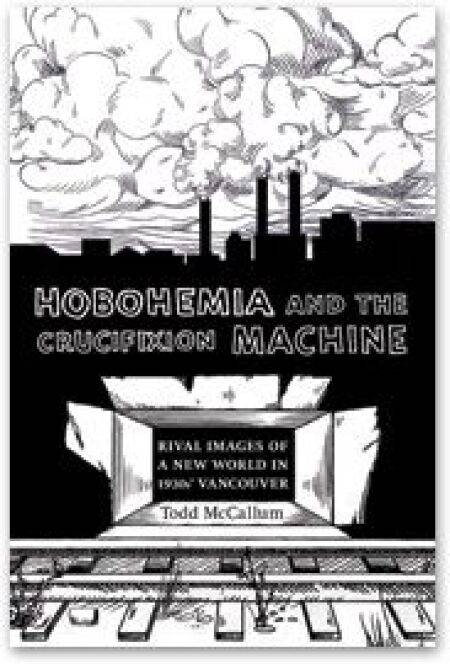
Hobohemia and the Crucifixion Machine EBOOK
Rival Images of a New World in 1930s Vancouver
Todd McCallum
19,99 €
+ 19 points
Format
Description
In the early years of the Great Depression, thousands of unemployed homeless transients settled into Vancouver’s “hobo jungle.” The jungle operated as a distinct community, in which goods were exchanged and shared directly, without benefit of currency. The organization of life was immediate and consensual, conducted in the absence of capital accumulation. But as the transients moved from the jungles to the city, they made innumerable demands on Vancouver’s Relief Department, consuming financial resources at a rate that threatened the city with bankruptcy. In response, the municipality instituted a card-control system—no longer offering relief recipients currency to do with as they chose. It also implemented new investigative and assessment procedures, including office spies, to weed out organizational inefficiencies. McCallum argues that, threatened by this “ungovernable society,” Vancouver’s Relief Department employed Fordist management methods that ultimately stripped the transients of their individuality.
Vancouver’s municipal government entered into contractual relationships with dozens of private businesses, tendering bids for meals in much the same fashion as for printing jobs and construction projects. As a result, entrepreneurs clamoured to get their share of the state spending. With the emergence of work relief camps, the provincial government harnessed the only currency that homeless men possessed: their muscle. This new form of unfree labour aided the province in developing its tourist driven “image” economy, as well as facilitating the transportation of natural resources and manufactured goods. It also led eventually to the most significant protest movement of 1930s’ Canada, the On-to-Ottawa Trek. Hobohemia and the Crucifixion Machine explores the connections between the history of transiency and that of Fordism, offering a new interpretation of the economic and political crises that wracked Canada in the early years of the Great Depression.
Vancouver’s municipal government entered into contractual relationships with dozens of private businesses, tendering bids for meals in much the same fashion as for printing jobs and construction projects. As a result, entrepreneurs clamoured to get their share of the state spending. With the emergence of work relief camps, the provincial government harnessed the only currency that homeless men possessed: their muscle. This new form of unfree labour aided the province in developing its tourist driven “image” economy, as well as facilitating the transportation of natural resources and manufactured goods. It also led eventually to the most significant protest movement of 1930s’ Canada, the On-to-Ottawa Trek. Hobohemia and the Crucifixion Machine explores the connections between the history of transiency and that of Fordism, offering a new interpretation of the economic and political crises that wracked Canada in the early years of the Great Depression.
Spécifications
Parties prenantes
- Auteur(s) :
- Editeur:
Contenu
- Nombre de pages :
- 332
- Langue:
- Anglais
- Collection :
Caractéristiques
- EAN:
- 9781926836294
- Date de parution :
- 28-12-14
- Format:
- Ebook
- Protection digitale:
- Digital watermarking
- Format numérique:


Seulement chez Librairie Club
+ 19 points sur votre carte client de Librairie Club
Cadeau


Les avis
Nous publions uniquement les avis qui respectent les conditions requises. Consultez nos conditions pour les avis.