


- Retrait en 2 heures
- Assortiment impressionnant
- Paiement sécurisé
- Toujours un magasin près de chez vous
- Retrait en 2 heures
- Assortiment impressionnant
- Paiement sécurisé
- Toujours un magasin près de chez vous



24,45 €
+ 48 points
Description
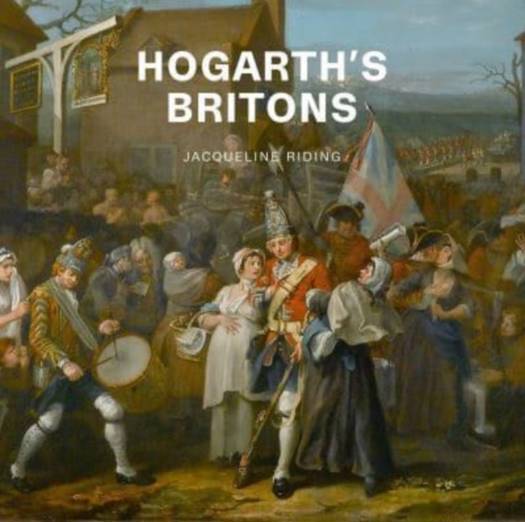
Hogarth’s Britons explores how the English painter and graphic satirist William Hogarth (1697–1764) set out to define British nationhood and identity at a time of division at home and conflict abroad. With notions of community cohesion, good citizenship and patriotism, wrapped up in a unifying idea of British national character and spirit in all its variety, and set alongside the ongoing national debate on Britain’s past, present and future within European and World affairs, Hogarth and his art has never been more relevant.
In the summer of 1745, Prince Charles Edward Stuart ‘Bonnie Prince Charlie’ landed with his supporters, the ‘Jacobites’, in a remote corner of Scotland. This signalled the start of
his audacious military campaign, with the backing of Britain’s global adversary France and during a Europe-wide war, to topple the Hanoverian, Protestant monarch George II and restore the Catholic Stuarts, exiled in France and then Rome since 1688, to the throne. The country descended into turmoil, with regional, local and family loyalty for these rival royal dynasties severely tested, and opposing visions for the new nation of Great Britain – since the Union of England and Scotland in 1707 – laid bare. By early December the prince
and his 6,000 troops arrived in Derby, just 120 miles and five days’ march from London. For both sides everything was at stake.
From the 1720s, through the crises of the early 1740s, to the civil war called the 1745 Jacobite Rebellion or Rising, Prince Charles’s defeat at Culloden in April 1746 and beyond, Hogarth created some of the most iconic images in British and European art, including Marriage A-La-Mode, O the Roast Beef of Old England (The Gate of Calais) and The March of the Guards to Finchley. Through such vibrant scenes, rich in topical commentary, he conveyed a sense of external threat (real and imagined) from foreign powers and internal political, social and cultural upheaval. At the same time he offered his fellow Britons a
confident, reassuring idea of the rights and liberties they enjoyed under King George and his government: a flawed status quo, as Hogarth would readily admit, yet certainly better, he would argue, than the regime that would replace it under the ‘popish’ Stuarts as client monarchs of the self-serving French king, Louis XV.
With British society and politics in flux, and the Union between Scotland and England arguably more vulnerable now than at any moment since 1746, the themes explored in Hogarth’s Britons have profound resonance with our own time.
In the summer of 1745, Prince Charles Edward Stuart ‘Bonnie Prince Charlie’ landed with his supporters, the ‘Jacobites’, in a remote corner of Scotland. This signalled the start of
his audacious military campaign, with the backing of Britain’s global adversary France and during a Europe-wide war, to topple the Hanoverian, Protestant monarch George II and restore the Catholic Stuarts, exiled in France and then Rome since 1688, to the throne. The country descended into turmoil, with regional, local and family loyalty for these rival royal dynasties severely tested, and opposing visions for the new nation of Great Britain – since the Union of England and Scotland in 1707 – laid bare. By early December the prince
and his 6,000 troops arrived in Derby, just 120 miles and five days’ march from London. For both sides everything was at stake.
From the 1720s, through the crises of the early 1740s, to the civil war called the 1745 Jacobite Rebellion or Rising, Prince Charles’s defeat at Culloden in April 1746 and beyond, Hogarth created some of the most iconic images in British and European art, including Marriage A-La-Mode, O the Roast Beef of Old England (The Gate of Calais) and The March of the Guards to Finchley. Through such vibrant scenes, rich in topical commentary, he conveyed a sense of external threat (real and imagined) from foreign powers and internal political, social and cultural upheaval. At the same time he offered his fellow Britons a
confident, reassuring idea of the rights and liberties they enjoyed under King George and his government: a flawed status quo, as Hogarth would readily admit, yet certainly better, he would argue, than the regime that would replace it under the ‘popish’ Stuarts as client monarchs of the self-serving French king, Louis XV.
With British society and politics in flux, and the Union between Scotland and England arguably more vulnerable now than at any moment since 1746, the themes explored in Hogarth’s Britons have profound resonance with our own time.
Spécifications
Parties prenantes
- Auteur(s) :
- Editeur:
Contenu
- Nombre de pages :
- 120
- Langue:
- Anglais
Caractéristiques
- EAN:
- 9781913645458
- Date de parution :
- 10-03-2023
- Format:
- Livre broché
- Dimensions :
- 211 mm x 208 mm
- Poids :
- 368 g


Seulement chez Librairie Club
+ 48 points sur votre carte client de Librairie Club
Cadeau


Les avis
Nous publions uniquement les avis qui respectent les conditions requises. Consultez nos conditions pour les avis.