


- Retrait en 2 heures
- Assortiment impressionnant
- Paiement sécurisé
- Toujours un magasin près de chez vous
- Retrait en 2 heures
- Assortiment impressionnant
- Paiement sécurisé
- Toujours un magasin près de chez vous



59,95 €
+ 119 points
Description
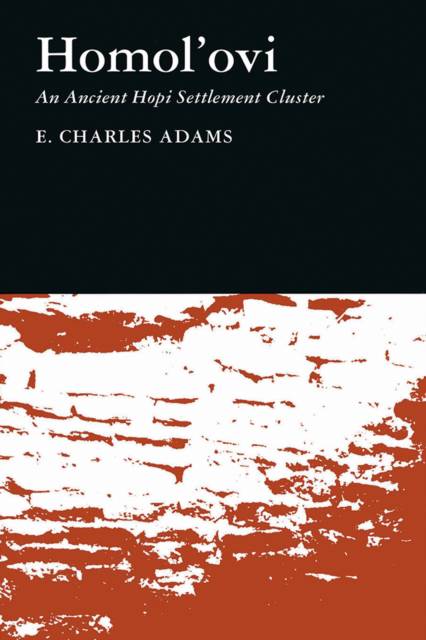
Beginning sometime in the thirteenth century, people from the Hopi Mesas established a cluster of villages to the south along the Little Colorado River. They were attracted by the river's resources and the region's ideal conditions for growing cotton. By the late 1300s, these Homol'ovi villages were the center of a robust trade in cotton among many clusters of villages near or on the southern Colorado Plateau and were involved in the beginning of the katsina religion among Hopi people. Charles Adams has directed fifteen years of research at these sites for the Arizona State Museum, including excavations in five of the seven primary Homol'ovi villages and in other villages predating them. Through this research he concludes that the founders of these settlements were Hopis who sought to protect their territory from migrating groups elsewhere in the Pueblo world. This book summarizes that research and broadens our understanding of the relationship of Homol'ovi to ancient and modern Hopi people. Each Homol'ovi village had a unique history of establishment, growth, sociopolitical organization, length of occupation, and abandonment; and although the villages shared much in the way of material culture, their size and configuration were tremendously varied. By comparing Homol'ovi research to information from projects on other settlements in the area, Adams has been able to reconstruct a provocative history of the Homol'ovi cluster that includes relationships among the individual villages and their relationships to nearby clusters. He shows that social organization within villages is apparent by the number and variety of ritual structures, while political organization among villages is indicated by the need for cooperation to share water for irrigation and by the exchange of such materials as pottery, obsidian, and ground stone. Adams advances several important theories about why Homol'ovi was founded where and when it was, who its founders were, and the importance of cotton in making Homol'ovi an important center of trade in the 1300s. He also considers why Pueblo settlements suddenly became so large, addressing theoretical issues pertaining to multiple settlements and the rise of enormous villages containing more than 1,000 rooms. Homol'ovi is a rich work of synthesis and interpretation that will be important for anyone with an interest in Southwest archaeology, Arizona history, or Hopi culture. By considering the settlement trajectory of an entire cluster of sites, it will also prove valuable to archaeologists worldwide.
Spécifications
Parties prenantes
- Auteur(s) :
- Editeur:
Contenu
- Nombre de pages :
- 328
- Langue:
- Anglais
Caractéristiques
- EAN:
- 9780816540105
- Date de parution :
- 02-04-19
- Format:
- Livre broché
- Format numérique:
- Trade paperback (VS)
- Dimensions :
- 152 mm x 226 mm
- Poids :
- 408 g



Seulement chez Librairie Club
+ 119 points sur votre carte client de Librairie Club
Cadeau


Les avis
Nous publions uniquement les avis qui respectent les conditions requises. Consultez nos conditions pour les avis.