


En raison d'une grève chez bpost, des retards de livraison peuvent survenir. Besoin de quelque chose en urgence ? Optez pour un retrait en magasin ou rendez-vous dans une Librairie Club à proximité.
- Retrait en 2 heures
- Assortiment impressionnant
- Paiement sécurisé
- Toujours un magasin près de chez vous
En raison d'une grève chez bpost, des retards de livraison peuvent survenir. Besoin de quelque chose en urgence ? Optez pour un retrait en magasin ou rendez-vous dans une Librairie Club à proximité.
- Retrait en 2 heures
- Assortiment impressionnant
- Paiement sécurisé
- Toujours un magasin près de chez vous



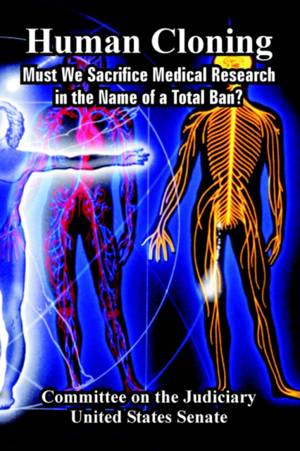
Human Cloning
Must We Sacrifice Medical Research in the Name of a Total Ban?
Committee on the Judiciary, United States Senate
Livre broché | Anglais
16,45 €
Description
"Cloning seems to be one of those words and concepts that seems to inspire a lot of dread in people, visions of an apocalyptic world marching lockstep. However, as is the case with many medical technologies, it is not cloning that is the problem, but some of its potential applications. For example, we are all concerned about the sale of human organs or the transplant of organs from executed prisoners, but few people argue that the solution to these potential problems is to ban organ transplantation. "The truth is that there is bad cloning and good cloning, I believe. Bad cloning is human cloning, the creation of carbon copies of whole human beings. Good cloning is nuclear transplantation to produce stem cells. "There is broad agreement across our society, in Congress and in the scientific, medical and religious communities, that we should ban human cloning. Such cloning is scientifically unsafe, morally unacceptable, and ethically flawed. "However, at least to me, it is also clear, and I think to the overwhelming majority of the scientific and medical community, that we should not ban nuclear transplantation to produce stem cells. Many doctors and scientists have argued that we must protect our ability to use cloning techniques to try to save and improve the lives of those ravaged by disease and other ailments. "In fact, nuclear transplantation offers enormous potential for providing cures to diseases such as cancer, diabetes, cystic fibrosis, and heart disease, as well as conditions such as spinal cord injuries, liver damage, arthritis, and burns. This technique could allow the creation of bone marrow for transplants to leukemia victims, islet cells for the pancreas of a diabetic, heart or liver tissue to repair the damage caused by heart attacks or hepatitis, healthy skin for grafts for burn victims, and many other potential cures and treatments for a variety of diseases and ailments. - Senator Dianne Feinstein
Spécifications
Parties prenantes
- Auteur(s) :
- Editeur:
Contenu
- Nombre de pages :
- 108
- Langue:
- Anglais
Caractéristiques
- EAN:
- 9781410224477
- Date de parution :
- 22-06-05
- Format:
- Livre broché
- Format numérique:
- Trade paperback (VS)
- Dimensions :
- 152 mm x 229 mm
- Poids :
- 167 g


Seulement chez Librairie Club
Cadeau


Les avis
Nous publions uniquement les avis qui respectent les conditions requises. Consultez nos conditions pour les avis.