


- Retrait en 2 heures
- Assortiment impressionnant
- Paiement sécurisé
- Toujours un magasin près de chez vous
- Retrait en 2 heures
- Assortiment impressionnant
- Paiement sécurisé
- Toujours un magasin près de chez vous



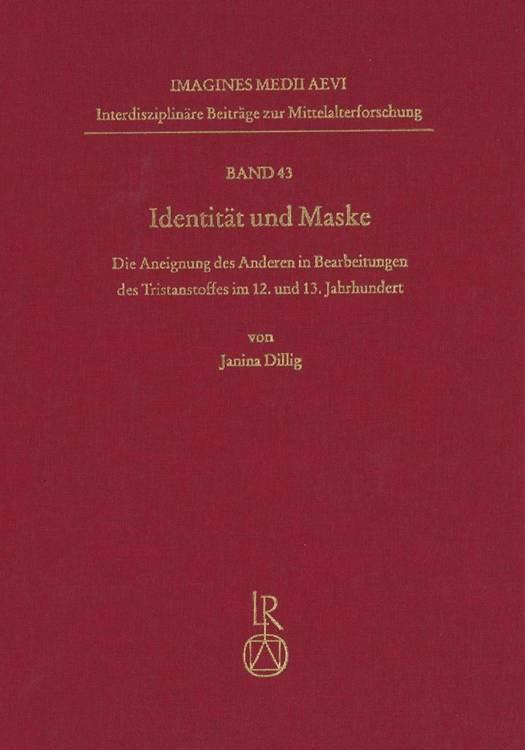
Identität Und Maske
Die Aneignung Des Anderen in Bearbeitungen Des Tristanstoffes Im 12. Und 13. Jahrhundert
Janina Dillig
103,45 €
+ 206 points
Description
The basic prerequisites of identity in the Middle Ages are supposedly already known but loose their significance as soon as identity is concealed, which happens quite often in medieval literature. There are several protagonists who hide their identity either by not naming themselves or by hiding their bodies through a disguise. Therefore, this volume concentrates on episodes in which identity becomes ambiguous thorough the use of disguises. Through this focus, the interdependencies between identity and disguises are explored in depth. In this way, these episodes are not underestimated as droll story elements but are actively used to explain how identity is constructed in medieval literature. It is the aim of this monograph to uncover and analyze the link between identity and disguise and in so doing contribute to a fuller understanding of the different and manifold ways of identity construction in the Middle Ages and to show parallels to modern forms of identity.
Subject of the study is the Tristan character who uses disguises in most all Middle High German adaptations due to his illicit love to Isolde and the resulting need for secrecy. Tristan can be understood as the prime example of the options and uses of disguises in the Middle Ages and medieval literature.
By concentrating on the Tristan character, the research in this book is part of a bigger scientific discussion on identity in the Tristan stories but fundamentally differs from other works through its focus on Tristan's disguises such as a pilgrim, a leper or a fool. In addition, this work distinguishes itself from similar works by not only looking at the 'Tristan' of Gottfried of Straßburg but including the entire Middle High German Tristan tradition starting from Eilhart of Oberg until the end of the 13th century. As such, the continuations of Ulrich of Türheim and Heinrich von Freiberg and especially the poem 'Tristan as a monk' are analyzed to the same degree as Gottfried's 'Tristan'. This makes it possible to also look at the differences between these Tristan narrations and their significance for the construction of the identity of a literary character such as Tristan.
Subject of the study is the Tristan character who uses disguises in most all Middle High German adaptations due to his illicit love to Isolde and the resulting need for secrecy. Tristan can be understood as the prime example of the options and uses of disguises in the Middle Ages and medieval literature.
By concentrating on the Tristan character, the research in this book is part of a bigger scientific discussion on identity in the Tristan stories but fundamentally differs from other works through its focus on Tristan's disguises such as a pilgrim, a leper or a fool. In addition, this work distinguishes itself from similar works by not only looking at the 'Tristan' of Gottfried of Straßburg but including the entire Middle High German Tristan tradition starting from Eilhart of Oberg until the end of the 13th century. As such, the continuations of Ulrich of Türheim and Heinrich von Freiberg and especially the poem 'Tristan as a monk' are analyzed to the same degree as Gottfried's 'Tristan'. This makes it possible to also look at the differences between these Tristan narrations and their significance for the construction of the identity of a literary character such as Tristan.
Spécifications
Parties prenantes
- Auteur(s) :
- Editeur:
Contenu
- Nombre de pages :
- 336
- Langue:
- Allemand
- Collection :
Caractéristiques
- EAN:
- 9783954904020
- Date de parution :
- 10-04-19
- Format:
- Livre relié
- Format numérique:
- Genaaid
- Dimensions :
- 180 mm x 246 mm
- Poids :
- 652 g


Seulement chez Librairie Club
+ 206 points sur votre carte client de Librairie Club
Cadeau


Les avis
Nous publions uniquement les avis qui respectent les conditions requises. Consultez nos conditions pour les avis.