


- Retrait en 2 heures
- Assortiment impressionnant
- Paiement sécurisé
- Toujours un magasin près de chez vous
- Retrait gratuit dans votre magasin Club
- 7.000.0000 titres dans notre catalogue
- Payer en toute sécurité
- Toujours un magasin près de chez vous



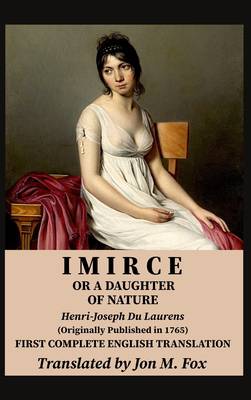
Imirce, or A Daughter of Nature
First Complete English Translation. Annotated.
Henri Joseph Dulaurens
Livre relié | Anglais
55,45 €
+ 110 points
Description
I was born in France. I don't know in which province.
I knew neither father nor mother.
My childhood lasted twenty-two years.
Until that age, I saw neither the sky nor the earth....
Thus begins the story of Imirce, or a Daughter of Nature.
This is the first full translation of Imirce, ou la Fille de la Nature in any language. Only a partial, censored translation appeared in print in an English language collection of stories published in 1787. All other editions of the book have been in French, with the last printed in a partial limited edition in 1922, and an annotated French version in 1998..
As a figure who straddled the Enlightenment, Du Laurens is among the most enigmatic and scandalous authors in literary history. Due to his radically anticlerical, and often erotically pornographic, writings, his opponents accused him of deism or atheism, as well as immorality and obscenity. His works were all printed clandestinely under various pseudonyms and were immediately persecuted upon publication. The authorship of some works has only been established in recent years.
The theme of the central story is the socialization of Imirce, who has grown up in isolation, and the potential for social criticism unleashed by this situation. Ignorant and naive, but also free of prejudice, Imirce reacts with astonishment and outrage to the absurdity and injustice of social reality. That this work is intended as a sharp contrast to Rousseau, with whom Du Laurens disagreed, and his novel Èmile, is conveniently overlooked by some in its assessment. The additional related tales look at other aspects of society and the world, as Du Laurens observed them.
Spécifications
Parties prenantes
- Auteur(s) :
- Traducteur(s):
- Editeur:
Contenu
- Nombre de pages :
- 348
- Langue:
- Anglais
Caractéristiques
- EAN:
- 9798295678929
- Date de parution :
- 20-03-26
- Format:
- Livre relié
- Format numérique:
- Genaaid
- Dimensions :
- 152 mm x 229 mm
- Poids :
- 798 g


Seulement chez Librairie Club
+ 110 points sur votre carte client de Librairie Club
Cadeau

Cadeau


Les avis
Nous publions uniquement les avis qui respectent les conditions requises. Consultez nos conditions pour les avis.