


- Retrait en 2 heures
- Assortiment impressionnant
- Paiement sécurisé
- Toujours un magasin près de chez vous
- Retrait en 2 heures
- Assortiment impressionnant
- Paiement sécurisé
- Toujours un magasin près de chez vous



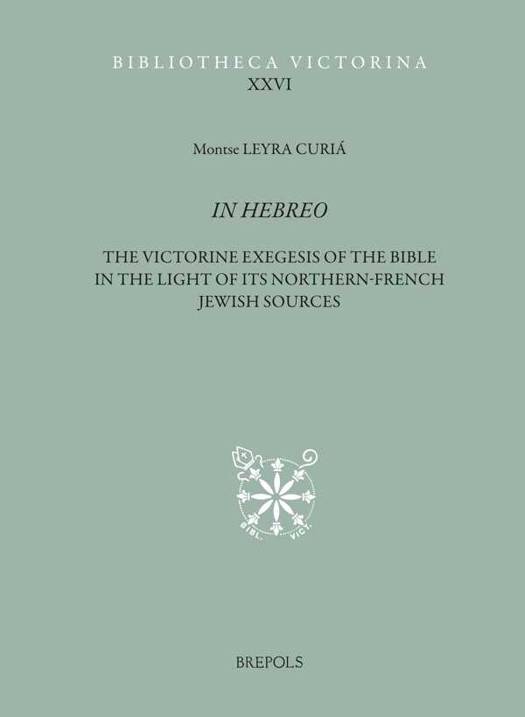
In Hebreo
The Victorine Commentaries on the Pentateuch and the Former Prophets in the Light of Its Northern-French Jewish Sources
Montse Leyra Curia
111,30 €
+ 222 points
Description
In the twentieth century a number of scholars pointed to parallels between the in hebreo or secundum hebreos interpretations in the commentaries of Hugh and Andrew of St. Victor and comments in Latin sources and in twelfth-century Jewish writers of the Northern-French school (Rashi, Joseph Qara, Rashbam, and Beckhor Shor). The scholars suggested various hypotheses on the Victorines' direct or indirect knowledge of the Hebrew text of the Bible and the identity of the Jews on whom the Victorines reportedly drew. Montse Leyra's book offers a systematic work of comparative analysis between the Victorines' in hebreo interpretations and their parallels in the Latin and Jewish sources, and between these interpretations and parallel biblical readings in the textual traditions of the Vetus Latina, the Vulgate, and the Hebrew Masoretic Text. In her analysis, Montse Leyra discusses parallels that have gone unnoticed by previous scholars, identifies which sources were a direct source for the Victorines and which were transmitted via later, intermediary sources, and determines whether the Victorines took up textual biblical variants coming from the Vetus Latina and the Septuagint as literal translations of the Hebrew Masoretic Text or they were transmitting the Masoretic text itself. Finally, by studying the parallels of content and exegetical method between the in hebreo interpretations of the Victorines and surviving interpretations of Rashi, Rashbam, Joseph Qarah, and Bekhor Shor, she ascertains whether we can actually identify and distinguish the exegetes of the Northern-French school whose works have been transmitted to us as direct sources of Hugh and Andrew from other Jewish exegetes of their time.
Spécifications
Parties prenantes
- Auteur(s) :
- Editeur:
Contenu
- Nombre de pages :
- 408
- Langue:
- Anglais
- Collection :
- Tome:
- n° 26
Caractéristiques
- EAN:
- 9782503575421
- Date de parution :
- 20-02-18
- Format:
- Livre relié
- Format numérique:
- Genaaid
- Poids :
- 530 g


Seulement chez Librairie Club
+ 222 points sur votre carte client de Librairie Club
Cadeau


Les avis
Nous publions uniquement les avis qui respectent les conditions requises. Consultez nos conditions pour les avis.