


- Retrait en 2 heures
- Assortiment impressionnant
- Paiement sécurisé
- Toujours un magasin près de chez vous
- Retrait gratuit dans votre magasin Club
- 7.000.0000 titres dans notre catalogue
- Payer en toute sécurité
- Toujours un magasin près de chez vous

Description
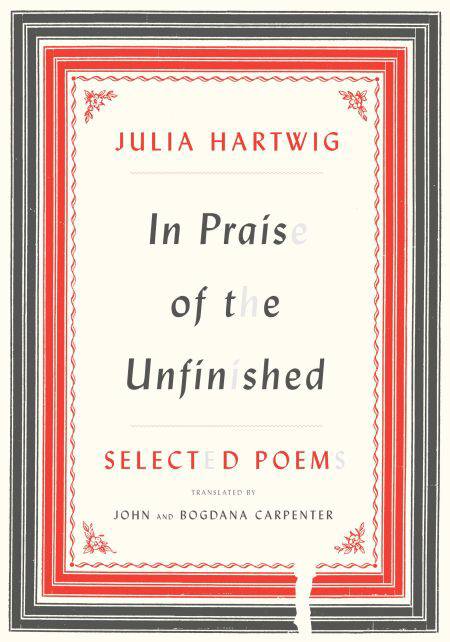
Hailed by Czeslaw Milosz as “the grande dame of Polish poetry” and named “one of the foremost Polish poets of the twentieth century” by Ryszard Kapuscinski, Julia Hartwig has long been considered the gold standard of poetry in her native Poland. With this career-spanning collection, we finally have a book of her work in English.
The tragic story of the last century flows naturally through Hartwig’s poems. She evokes the husbands who returned silent from battle (“What woman was told about the hell at Monte Cassino?”) and asks, “Why didn’t I dance on the Champs-Élysées / when the crowd cheered the end of the war? . . . Why was I fated to be on the main street of Lublin / watching regiments with red stars enter the city.” But there is also a welcoming of new experience in her verse, a sense that life, finally, is too beautiful to condemn. She seeks a higher peace, urging us to hear other voices: “an ermine’s cry, moan of a dove, / complaint of an owl—that remind us / the hardship of solitude is measured out equally.”
Hartwig’s compassionate spirit in the face of destruction and suffering, her apparent need to live in the moment, make her poems monumental and deeply touching and the introduction of her work here long overdue.
Return to My Childhood Home
Amid a dark silence of pines—the shouts of
young birches calling each other.
Everything is as it was. Nothing is as it was.
Speak to me, Lord of the child. Speak,
innocent terror!
To understand nothing. Each time in a different
way, from the first cry to the last breath.
Yet happy moments come to me from the past,
like bridesmaids carrying oil lamps.
The tragic story of the last century flows naturally through Hartwig’s poems. She evokes the husbands who returned silent from battle (“What woman was told about the hell at Monte Cassino?”) and asks, “Why didn’t I dance on the Champs-Élysées / when the crowd cheered the end of the war? . . . Why was I fated to be on the main street of Lublin / watching regiments with red stars enter the city.” But there is also a welcoming of new experience in her verse, a sense that life, finally, is too beautiful to condemn. She seeks a higher peace, urging us to hear other voices: “an ermine’s cry, moan of a dove, / complaint of an owl—that remind us / the hardship of solitude is measured out equally.”
Hartwig’s compassionate spirit in the face of destruction and suffering, her apparent need to live in the moment, make her poems monumental and deeply touching and the introduction of her work here long overdue.
Return to My Childhood Home
Amid a dark silence of pines—the shouts of
young birches calling each other.
Everything is as it was. Nothing is as it was.
Speak to me, Lord of the child. Speak,
innocent terror!
To understand nothing. Each time in a different
way, from the first cry to the last breath.
Yet happy moments come to me from the past,
like bridesmaids carrying oil lamps.
Spécifications
Parties prenantes
- Auteur(s) :
- Traducteur(s):
- Editeur:
Contenu
- Nombre de pages :
- 160
- Langue:
- Anglais
Caractéristiques
- EAN:
- 9780307496102
- Date de parution :
- 06-11-12
- Format:
- Ebook
- Protection digitale:
- Adobe DRM
- Format numérique:
- ePub


Seulement chez Librairie Club
+ 9 points sur votre carte client de Librairie Club
Cadeau

Cadeau


Les avis
Nous publions uniquement les avis qui respectent les conditions requises. Consultez nos conditions pour les avis.