


En raison d'une grève chez bpost, des retards de livraison peuvent survenir. Besoin de quelque chose en urgence ? Optez pour un retrait en magasin ou rendez-vous dans une Librairie Club à proximité.
- Retrait en 2 heures
- Assortiment impressionnant
- Paiement sécurisé
- Toujours un magasin près de chez vous
En raison d'une grève chez bpost, des retards de livraison peuvent survenir. Besoin de quelque chose en urgence ? Optez pour un retrait en magasin ou rendez-vous dans une Librairie Club à proximité.
- Retrait en 2 heures
- Assortiment impressionnant
- Paiement sécurisé
- Toujours un magasin près de chez vous



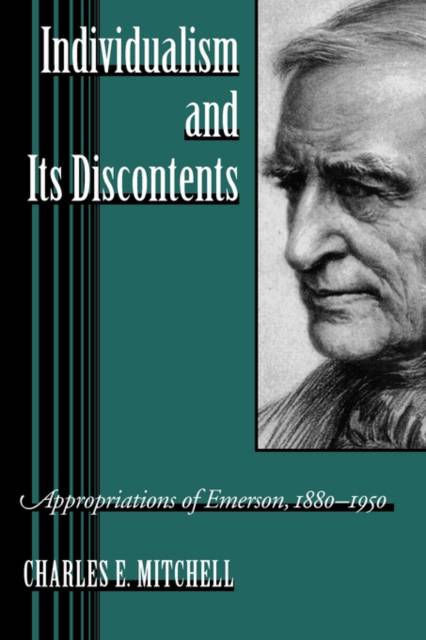
Individualism and Its Discontents
Appropriations of Emerson, 1880-1950
Charles E Mitchell
Livre broché | Anglais
55,95 €
+ 111 points
Description
The work of Ralph Waldo Emerson has long been synonymous with the American ideals of self-reliance and individualism. Like those ideals, it has come to mean different things, at different times, to different people. Emerson has been identified as the source of both the best and worst in the American intellectual tradition, his authority invoked by back-to-the-landers and industrial capitalists, the philosopher Nietzsche, as well as the promoters of Nike footwear.
This book explores the intertwined history of Emerson and individualism. Charles E. Mitchell begins by examining those who regarded Emersonian individualism with ambivalence or hostility, focusing on the comments of such diverse figures as Henry James, Sr., Oliver Wendell Holmes, Van Wyck Brooks, and H.L. Mencken. He then offers an alternative view as reflected in the work of William James, John Dewey, W.E.B. Du Bois, and William Carlos Williams. Each of these figures embraced Emerson's claim for the sanctity of the individual and wove it into a social vision that sought to reconcile the paradox at the heart of American life: a simultaneous devotion to the community and the individual, tradition and innovation, order and freedom.
While indirectly answering Emerson's more fervent critics, James, Dewey, Du Bois, and Williams also constructed a vibrant tradition of their own, one that offers guidance as Americans continue to struggle with these competing claims.
Spécifications
Parties prenantes
- Auteur(s) :
- Editeur:
Contenu
- Nombre de pages :
- 232
- Langue:
- Anglais
Caractéristiques
- EAN:
- 9781558497757
- Date de parution :
- 31-12-10
- Format:
- Livre broché
- Format numérique:
- Trade paperback (VS)
- Dimensions :
- 152 mm x 229 mm
- Poids :
- 349 g



Seulement chez Librairie Club
+ 111 points sur votre carte client de Librairie Club
Cadeau

Cadeau


Les avis
Nous publions uniquement les avis qui respectent les conditions requises. Consultez nos conditions pour les avis.